
ESG claims are now checked the way financial claims are
ESG began as a reporting exercise and became a due diligence question. Investors, lenders, acquirers and regulators now test environmental, social and governance claims much as they test financial ones. The exposure has shifted accordingly — from whether you have a policy to whether that policy survives being checked by someone with no obligation to be generous about it.
Concurrently, mounting evidence shows that companies that prioritize ESG criteria often exhibit stronger financial performance and lower risk profiles, making them more attractive to investors. Regulatory bodies around the globe are also imposing stringent ESG requirements on businesses.
All these factors are driving a profound shift toward sustainable business practices, making ESG an essential focus for companies aiming to thrive in the 21st century. From the CFA Institute to IFRS, which started the ISSB (International Sustainability Standards Board); to the United Nations, all have published disclosure standards that are gradually being rolled out as reporting requirements beyond pure financial information.
Why invest in an ESG Verification & Audit?
As businesses increasingly integrate ESG (Environmental, Social, and Governance) factors into their operations, several new risks and liabilities emerge. With the growth of ESG awareness, regulations have also increased significantly. Non-compliance with these new laws and regulations can result in hefty fines, reputational damage, and could even lead to business operation limitations. Investors are now more discerning and are increasingly favoring companies with strong ESG credentials. Those businesses failing to meet ESG expectations may find it harder to attract funding, affecting their financial stability and growth prospects. Companies that fail to live up to ESG standards risk damaging their reputations, which can result in loss of customers, investors, and even employees. As social media and rapid news cycles can amplify any perceived failures in these areas, managing this risk effectively is of the utmost importance.

Supply chains are where ESG claims are hardest to evidence: the further a commitment travels from head office, the thinner the paper trail behind it. Verification follows the claim down to the tier where it either holds or quietly stops being true.
How to approach an ESG Verification & Audit?
We work with organizations building an ESG program and with those that already have one and want it independently tested. The two questions are different — the first is about design, the second about whether practice has drifted from the document — but the standard applied is the same.
Questions you might have
Regulatory Review and Compliance
We review your existing ESG policy against the regulatory requirements that actually apply to you, with particular attention to the EU and US frameworks, and identify where you are exposed. The output names each gap and what closing it will take.
ESG Policy Implementation Review
A policy that does not reach the investment process and the daily workflow is a document, not a control. We assess how the strategy is actually applied: who applies it, at which decision points, and what happens to it when it conflicts with a commercial objective. That last question is usually the informative one.

Heavy-asset operations attract the closest reading of any disclosure a company publishes. Regulators and journalists can assess a marketing claim without the company’s cooperation, which is why the wording of a policy and the practice behind it need to match before anyone else compares them.
ESG Marketing and Communication Assessment
Disclosure is where greenwashing allegations begin, because it is the part regulators and journalists can read without your cooperation. We review marketing documents, client communications and formal disclosures for claims that are stronger than the evidence behind them — usually a drafting problem rather than a deliberate one, and far cheaper to fix before publication than after.
Investment portfolio stress testing through ESG Verification & Audit
We stress test the portfolio under extreme market scenarios to establish how it behaves once conditions stop being normal — and specifically whether ESG constraints hold, or get quietly suspended, at the point where holding them becomes expensive.

Green and ESG-labeled funds carry the label into every investor conversation, so they draw scrutiny from regulators and from the investors who bought it. Stress testing asks the harder question: whether the ESG constraint survives the conditions in which holding it actually costs something.
At the heart of ESG Verification & Audit: Green and ESG funds compliance review
Green and ESG-labeled funds attract the most scrutiny, from regulators and from the investors who bought the label. We review these funds against both the regulatory standard and the fund’s own stated criteria — frequently the stricter of the two, and the one you will be held to.
The purpose of the work is narrow and practical: that what you say about your ESG position is accurate, defensible, and supported by something you can produce when somebody asks to see it.
How the engagement runs
The sequence matters: establishing what applies to you comes before testing whether you meet it.
Most greenwashing findings begin in the verification stage and rarely involve deliberate deception. A claim gets drafted slightly stronger than the evidence supports, and nobody checks it again before it appears in a fund document.
When to commission one
- Before a fundraise or a major mandate, where ESG claims will be examined by someone with no reason to be generous.
- When a regulatory regime newly applies to you and the honest answer to “are we compliant?” is nobody has checked.
- Before publishing an ESG report or launching a labeled fund.
- On acquisition, where you inherit the target’s claims along with its assets — see mergers and acquisitions support.
- When an allegation has been made and the priority is establishing the facts before responding.
Straight answers
Which ESG standards actually apply to us?
Fewer than the field implies, and the answer turns on domicile, where you market, your sector and your size. Establishing the real list is the cheapest part of the work and it routinely removes obligations people assumed they had.
Are our policies in line with local and international regulation?
Usually in substance, often not in evidence. The common failure is not a policy gap but an inability to demonstrate the policy operated, which is the same thing to a regulator.
Where are the ESG risks in our operations and supply chain?
Typically two or three tiers down, where visibility ends. That is an investigative question rather than a reporting one, and it overlaps with due diligence on suppliers.
Are we integrating ESG into decision-making, or alongside it?
Testable: look at what happened the last time an ESG constraint conflicted with a commercial objective. If nobody can recall such an occasion, that is itself the finding.
Will this find something we would rather not know?
Sometimes. Finding it yourself, before a regulator or a journalist, is materially better — and a documented gap you are actively closing is a far stronger position than an undiscovered one.
Get in touch about ESG Verification & Audit
Let us talk about your ESG Verification & Audit needs. We are here to help and are happy to give a non-binding and confidential assessment of your case and course of action. Contact Falcone International today for expert assistance.
Further reading
Selected from our Book of the Month series for their bearing on this service.
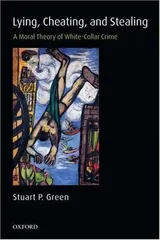 Lying, Cheating, and Stealing
Green is a legal philosopher asking precisely what is wrong with conduct that is often permitted. ESG findings frequently sit in exactly that space, and this book supplies the vocabulary to explain why something matters when the compliance answer is that it is allowed.
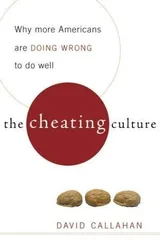 The Cheating Culture
Callahan’s argument is about conditions rather than characters: certain incentive structures make misconduct ordinary rather than exceptional. That is the right lens for an ESG audit, which is examining a system and not an individual.
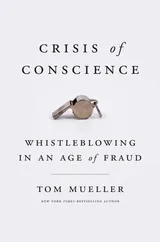 Crisis of Conscience
Mueller’s history of whistleblowing follows what happened to the people who reported, across decades and industries. How reporters are treated is the real test of any speak-up channel, and this is the evidence base for assessing one honestly.