
The risk that rarely reaches the risk register
Most organizations can name their financial, operational and cyber exposure. Far fewer can say what happens to the business if the government of a country they operate in changes its mind.
Political risk is unusual in that it is seldom gradual. A license is revoked, a currency control is imposed, a local partner turns out to be politically exposed, an export list expands overnight. The underlying conditions build for years; the consequence arrives in a week.
A political risk assessment establishes what a country’s leadership, institutions and political system actually mean for your operations there — before you commit capital, sign with a local partner, or move people in. We do that work in the places where the public record is thin and the useful information sits with people rather than in databases.

Questions clients bring us
What the assessment covers
A political risk assessment is a written view of a specific place, scoped to your specific exposure in it. It covers the formal picture — the government, the institutions that constrain it, the regulatory direction of travel, and the legal protections that would actually apply to you in a dispute — and the informal one, which is usually what decides outcomes: who holds real influence, which relationships matter, and how decisions get made when the published process is not followed.
It covers your counterparties. Whether a local partner, distributor or joint-venture principal is a politically exposed person carries compliance consequences as well as commercial ones, and in most of the markets where the question matters it is not reliably answerable from a screening database. Where the exposure runs through the people you are about to depend on, this work overlaps with pre-investment due diligence.
And it covers perception: how your organization, your sector and your home country are regarded in the target market. That determines whether you are a welcome investor or a convenient target when conditions turn.
What it is not. We are not a forecasting service. Nobody can tell you reliably whether a particular government will fall within eighteen months, and an assessment that claims to is selling confidence rather than analysis. What we can establish is what you are exposed to if it does, which early indicators are worth monitoring, and how much warning each one would realistically give you.
How the engagement runs
Four stages. The first is short and the most important.
Scoping is the stage clients most often want to skip, and the one that decides whether the rest is useful. An assessment of “the country” is close to worthless; an assessment of your plant, your partner and your people in that country is actionable.
1. Scoping
We establish what you actually have at risk in the country: assets, people, contracts, licenses, supply dependencies, and the local relationships the operation runs on. This is what turns a general country report into an assessment of your position.
2. Sourcing
Public record first — legislation, regulatory filings, court and enforcement activity, local-language press. Then people: former officials, policy analysts, and operators who have worked in the market recently. Our policy specialists are former diplomats, policy analysts and government officials, several with decades in the countries concerned, and in this field that access is what separates an assessment from a summary of the news.
3. Assessment
We set out which of your exposures hold under political stress, which break, and roughly on what timeline. Findings are separated into what is established, what is likely, and what is contested — because a board asked to make a decision on this needs to know which is which. Where the picture is commercially as well as politically driven, we run it alongside strategic business intelligence.
4. Monitoring, where it earns its place
A single assessment ages. Where an exposure is large or long-lived, we agree a short list of indicators and review them on a schedule, so a change reaches you before it reaches your operations.
When to commission one
Before capital is committed is the obvious answer and the least common one in practice. Assessments are most often commissioned at four moments:
- Before entering a market, signing a local partner, or acquiring an asset in an unfamiliar jurisdiction.
- When something has already changed — an election, a coup, a sanctions listing, a nationalization in the sector — and the board needs a position rather than a press summary.
- When you have people in country and the question has become a duty of care one, which is a legal obligation in many jurisdictions and follows where your staff are rather than where you are.
- On renewal — when an insurer, lender or investor asks what your political exposure is and the honest answer is that nobody has looked in three years.
The pattern behind all four is the same one described in our piece on how geopolitics reaches businesses of every size: political change rarely arrives as a headline. It arrives as a supplier who can no longer ship.
What you get
A written assessment, scoped to your operations, that a board can read in one sitting. It contains:
- Your exposures in that country, ranked, with what would have to happen for each to materialize.
- An account of the political and institutional picture, including who actually decides.
- Findings on the specific counterparties in scope, including politically exposed persons.
- The indicators worth monitoring, and how much warning each realistically gives.
- Where the evidence is thin, said plainly, rather than smoothed over.
Where circumstances warrant it, we also set out options for continuing operations through a period of instability rather than simply describing the risk.
Straight answers
Are we dealing with a politically exposed person?
Often the honest answer is “not on the databases, and that is not the same thing.” PEP screening tools cover national-level figures reasonably well and regional or municipal ones poorly, and they rarely capture family members or business proxies. Where a relationship matters commercially, it is worth establishing by hand. Our case study on a senior appointment turned on exactly that kind of connection, found in regional press rather than any index.
What are the written and unwritten policies?
The written ones are a research task. The unwritten ones — which approvals are really required, what a permit actually costs, who has to be consulted — come from people who have operated there. That is the part you cannot buy from a subscription service.
How will we be perceived in the target country?
This is asked less often than it should be. Sector, home country and ownership all affect how an organization is treated when a government needs a target. It is also the variable most likely to change without anything happening to you directly.
Can we manage political risk actively, or only insure against it?
Both, and they are different instruments. Insurance handles expropriation and political violence after the fact. Active management — structuring, partner selection, contingency planning, and knowing which indicators to watch — is what reduces the chance of needing to claim.
How long does an assessment take?
A focused assessment of a single country and a defined exposure is usually a matter of weeks rather than months. Where human sources are required in a difficult market, longer. We will tell you at scoping which of the two you are looking at, and what a compressed timeline would cost you in coverage. Related governance and sustainability exposure is handled through ESG verification and audit.
Falcone International
Get in touch about political risk assessment
Tell us which country and what you have at risk in it. We will tell you what can be established, in what time, and whether an assessment is the right instrument — without obligation, and in confidence.
Further reading
Selected from our Book of the Month series for their bearing on this service.
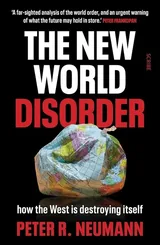 The New World Disorder
Neumann’s subject is the fragility of Western institutions themselves rather than instability somewhere else. For organizations with cross-border exposure that inversion is the useful part: home-market political risk is now a real line item.
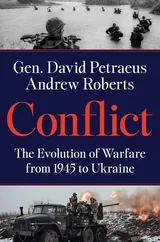 Conflict
Petraeus and Roberts examine how conflicts since 1945 were misread at the outset, and how adaptation rather than initial strength decided them. The lesson transfers directly to risk assessment, where the first read is rarely the one that matters.
 Cyberwar
Gaycken writes from a European vantage point on cyber conflict and industrial exposure, working from a different set of assumptions than the American literature. Reading it alongside the US accounts is the fastest way to see which conclusions are genuinely contested.