
Most of what you need to know is obtainable. It is just not in a database.
Strategic business intelligence answers questions about a market, a competitor or an operating environment that your own reporting cannot reach — usually because the people who know the answer do not work for you.
It is worth distinguishing this from its neighbors. Big data tells you what happened inside your own business. Competitive intelligence tracks a named rival. Strategic business intelligence is broader and more specific at once: it addresses a decision you are about to make, in a place where the published record is thin, and it is built from primary sources as well as documents.
The reason organizations commission it is nearly always the same. Something material is being decided — a market entry, an investment, a partner, a response to a competitor — and internal reporting has reached the edge of what it can establish. Local management may be optimistic, or simply not know.

Questions clients bring us
What the work covers
Four layers, and most engagements draw on more than one.
The market. How your sector is actually performing in a specific country or region, whether real demand exists at your price, whether a domestic incumbent already holds the ground, and whether local customers pay.
The place. Whether infrastructure will carry your operation — power, logistics, ports, connectivity — and what it costs when it fails. This is where the work meets political risk assessment, because in many markets the two questions are the same question.
The competition. Who is present, how they actually compete, where they are weak, and whether any advantage they hold is one you can lawfully match. Where a competitor’s advantage looks structurally implausible, establishing its source is often the most valuable finding in the engagement.
The authorities. Whether investment is genuinely encouraged or merely announced, what the approval process costs in time, and what pressure you should expect. Where that shades into improper demands, it becomes an FCPA question before it becomes a commercial one.
What this work is not. It does not extend to surveillance, and nothing in it is obtained by pretext or by inducing anyone to break a duty of confidence. Everything we produce has to be usable in a board paper and defensible afterward, which rules out a category of information that is technically obtainable. If a question can only be answered improperly, we will tell you that rather than answer it.
How the engagement runs
The discipline that makes this useful is separating what is established from what is inferred, and saying which is which.
Corroboration is the step that separates intelligence from rumor. A single well-placed source is a lead; the same picture arriving independently from a filing, the local press and someone who worked there is a finding you can put in front of a board.
1. Framing the decision
We start from the decision rather than the topic. “Tell us about the market” produces a report. “Should we sign this distributor, and what would make us walk away?” produces something you can act on, and costs less.
2. Collection
Public record, corporate filings, regulatory and court material, and local-language press — which is where most of the useful detail sits and where English-language research quietly fails. Then primary sources: former employees, competitors, customers, regulators and others with direct knowledge.
3. Corroboration
Nothing material goes in on a single source. We look for the same picture arriving independently from people and records that have no connection to each other.
4. Reporting with confidence stated
Findings are labeled established, likely, or contested. A board making a large commitment needs to know which parts of the picture would survive being challenged and which would not.
When to commission one
- Before entering a market, especially where you would be relying on a local partner from day one.
- When a competitor is doing something you cannot account for — winning on price you cannot match, or securing approvals unusually quickly.
- When local management’s reporting and the results have stopped agreeing.
- Ahead of a significant investment, alongside pre-investment due diligence, where the commercial question and the counterparty question both need answering.
- When something has gone wrong and you need to establish what happened before deciding how to respond.
What you get
- A written assessment addressed to your decision, readable in one sitting.
- Findings on the market, the operating environment, the competition and the authorities, as scoped.
- Every material finding labeled established, likely, or contested, with its basis.
- What could not be established, and what it would take to close the gap.
- Where useful, the indicators worth monitoring after the decision is made.
Straight answers
How is our industry really doing in that country?
Usually answerable to a good standard, by combining official statistics (which are sometimes optimistic) with what participants report privately. The divergence between the two is itself informative.
Where does a competitor’s advantage come from?
Often subsidy, scale, a supply relationship, or a regulatory position. Occasionally something improper. Establishing which matters commercially and legally, because the response is entirely different.
Will the infrastructure support us?
This is best answered by people currently operating there rather than by published capacity figures. Ask what happens in the third week of an outage.
Should we expect corruption?
Sometimes the honest answer is yes, and the useful follow-up is what form it takes, at which point in the process, and whether operating without participating is realistic. Some markets fail that test, and it is better to know before you commit.
How is this different from a consultancy market report?
A market report is largely desk research, sold to many buyers. This is primary-source work scoped to one decision and read by you alone. It costs more per page and rather less per decision. The analytical discipline behind it is set out well in How Spies Think, from our Book of the Month series.
Falcone International
Get in touch about strategic business intelligence
Tell us the decision you are about to make and where. We will tell you what can be established, from what sources, and to what confidence — without obligation, and in confidence.
Further reading
Selected from our Book of the Month series for their bearing on this service.
 How Spies Think
Omand ran GCHQ, and sets out the analytical discipline behind British intelligence assessment in plain terms. It is the best available bridge between national-security tradecraft and commercial decision-making.
 The Secret Sentry
Aid’s history of the NSA is, at bottom, about the distance between collecting information and understanding it. That gap is the central problem in business intelligence too, and the book is a long argument for investing in analysis rather than acquisition.
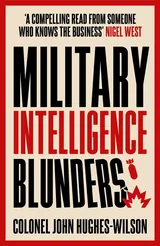 Military Intelligence Blunders and Cover-Ups
Hughes-Wilson’s cases mostly fail at dissemination and reception rather than collection: the assessment existed and did not reach, or did not persuade, the decision-maker. It is a sobering read for anyone producing intelligence meant to change what somebody does.