
Between 2012 and 2013, a Malaysian state development fund raised roughly US$6.5 billion through three bond offerings arranged by a single investment bank. The documentation was orthodox. US prosecutors later alleged that more than US$4.5 billion was misappropriated from that fund, 1Malaysia Development Berhad.
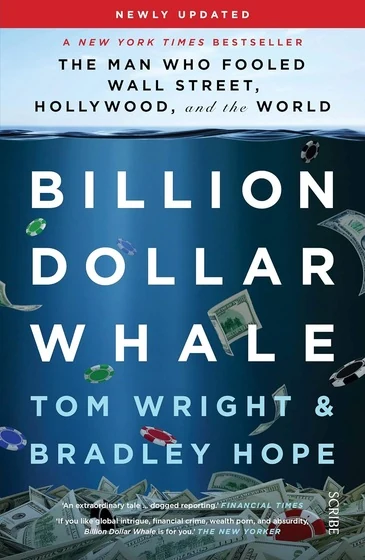
Billion Dollar Whale is Tom Wright and Bradley Hope's account of how that happened. It is usually shelved as a caper — the superyacht, the premieres, the Picasso — and read that way it is entertaining and forgettable. Read as a due-diligence file, it is a sequential record of gatekeepers declining to ask the question that would have stopped things.
Almost nobody here was defeated by an undetectable forgery. They were reassured by association: by the names already in the room, by the letterhead on the file, by the sense that someone more regulated had said yes first.
What the book actually covers
Low Taek Jho — Jho Low — held no formal position at the fund whose money moved. His method, as the authors reconstruct it, was to manufacture standing rather than earn it: cultivate proximity to Gulf royal circles and to the family of Malaysia's then prime minister, Najib Razak, and let counterparties infer authority.
The mechanics of the money earn the book its place on a compliance shelf. Wright and Hope follow funds through layers of offshore vehicles, including British Virgin Islands entities with names all but identical to genuine Abu Dhabi sovereign subsidiaries. A recipient name that matched expectations at a glance was, repeatedly, enough.
Then the institutions. The bank that arranged the bonds took fees well above the market norm for sovereign work; internal reviewers raised concerns and the deals proceeded anyway. Auditors changed more than once, and one firm later disowned its earlier opinions. The book appeared before the reckoning: in 2020 Goldman Sachs entered a deferred prosecution agreement with the US Department of Justice and its Malaysian subsidiary pleaded guilty. Tim Leissner, formerly its Southeast Asia chairman, had pleaded guilty in 2018; a second former banker, Roger Ng, was convicted at trial in 2022. Najib Razak was convicted in July 2020 over funds from SRC International, a former 1MDB unit, and the Federal Court upheld that conviction on final appeal in August 2022; proceedings relating to 1MDB itself are separate.
The Hollywood material is not decoration. Red Granite Pictures, co-founded by the prime minister's stepson, financed The Wolf of Wall Street and in 2018 paid US$60 million to settle US civil forfeiture claims without admitting wrongdoing. Proximity to fame made the money look explicable, and the money bought the proximity.
The authors work from documents and court filings rather than a single insider, keeping the alleged separate from the established. Low has consistently denied wrongdoing through his representatives. He was charged in absentia in Malaysia and the United States in 2018–19 and has not appeared to answer those criminal charges; a separate 2019 civil settlement with the US Department of Justice forfeited assets without any admission of liability.
Why it matters for your risk posture
Read it for the failure mode it isolates: comfort by proximity. Each gatekeeper took assurance from someone else's apparent assurance: the bank from the sovereign association, the counterparty from the bank, the financier from the bank's client list. No one held the whole picture, and every link was defensible on its own. If your onboarding leans on a regulated institution having cleared the client, you run the same control.
Read it because completeness and accuracy are different tests, and most processes run only the first. The files here were complete: forms signed, entities real, invoices matching instructions. Nobody checked independently that the named entity was the entity everyone assumed. In practice that check is run least often on the largest transactions, where the counterparty has already been vouched for.
Read it for the timeline. Concerns surfaced early, from journalists, from internal reviewers, from an auditor unwilling to sign off. The information existed years before the consequences did. What was absent was a route by which an inconvenient objection could halt a transaction carrying senior sponsorship — a governance design problem, not an investigative one.
Key takeaways
- Proximity is not diligence. Being introduced by a credible party, or transacting alongside one, says nothing about a counterparty's standing. Verify the party, not the room.
- Reconcile names to entities. Lookalike corporate names in permissive jurisdictions were central to how funds moved here. The check against that is trivial and rarely run.
- Fees carry information. Compensation far above market for the apparent work says something about what is really being bought. Treat it as a trigger.
- Escalation must survive seniority. Objections were raised and absorbed. A control that sponsorship can override is documentation, not control.
About the authors
Tom Wright and Bradley Hope reported on 1MDB for The Wall Street Journal, Wright from Southeast Asia and Hope from the financial-institutions side. The book grew out of that reporting and keeps its habits: documents over atmosphere, and care in distinguishing the alleged from the established.
Both later co-founded Project Brazen, a journalism and film studio that continued to cover the case.
Billion Dollar Whale: The Man Who Fooled Wall Street, Hollywood, and the World (Hachette Books, 2018).
Beyond the Book
Tom Wright & Bradley Hope - investigative reporters, formerly of The Wall Street Journal, co-founders of the journalism studio Project Brazen.
- Go to the primary sources: the US Department of Justice's civil forfeiture complaints in the 1MDB matter are public, and map how the funds moved.
- On screen: Man on the Run, the Netflix documentary on the scandal, features Wright among its interviewees.
- Continuing coverage: Project Brazen's Whale Hunting strand followed the case beyond the book.
- Read alongside: Kleptopia by Tom Burgis, on how illicit money attaches itself to reputable institutions, and Money Men by Dan McCrum, on the Wirecard fraud and how long a company can keep producing paperwork that no one independently tests.
Get your copy
Get your copy
Order Billion Dollar Whale: The Man Who Fooled Wall Street, Hollywood, and the World on Amazon: find it here.