
Money laundering is usually described from the compliance seat: obligations, thresholds, reports. Peter Lilley describes it from the other direction — as an industry, with practitioners, service providers, competitive dynamics and a global infrastructure that exists because there is enormous demand for it.
That reframing is the value. Laundering is not a series of transactions to be caught. It is a professional sector serving criminal clients, and understanding it as a business is what makes its structures recognisable.
What the book actually covers
Lilley's scope is deliberately wide: the international infrastructure through which illicit proceeds are moved, cleaned and reintegrated, and the connections between organised crime, corruption and terrorist financing.
He is strong on jurisdictions. Certain places have built genuine economic sectors around corporate secrecy, minimal beneficial ownership disclosure and cooperative formation regimes, and Lilley treats this as an industrial fact rather than a moral one. Understanding which jurisdictions serve which purposes in a structure is a practical diagnostic skill, and it is what allows an investigator to look at a corporate chain and form a view about its intent.
He is equally clear about professional enablers. Laundering at scale requires lawyers, accountants, company formation agents and bankers — some knowingly complicit, more of them wilfully incurious, and the distinction matters less than people assume. The professional intermediary is a structural feature of any serious laundering operation, not an incidental participant.
The typologies are covered systematically: cash-intensive businesses, trade mispricing, real estate, shell and nominee arrangements, correspondent banking relationships, and the layering of these into structures that are individually unremarkable and collectively diagnostic.
Written for a general professional audience rather than for investigators specifically, it is more readable than a manual and broader in scope.
Why it matters for your risk posture
Read it for the structural diagnostic. The single most useful skill in counterparty assessment is looking at a corporate structure and forming a view about why it was built that way. Lilley teaches the vocabulary — which jurisdictions, which intermediaries, which layering patterns serve which purposes — and that vocabulary is what converts an org chart into a finding.
Read it for the enabler problem, which is where institutional exposure usually sits. Most organisations that become entangled in laundering do so through professional intermediaries who were incurious rather than complicit. The distinction is legally significant and reputationally irrelevant, which is the risk.
And read it as the strategic complement to the investigative manual. John Madinger's guide, covered here, teaches you how to trace. Lilley teaches you what you are looking at when you find it, and why that structure exists at all.
Key takeaways
- Laundering is a service industry. It has practitioners, providers and competitive dynamics, and reading it as a sector makes its structures legible.
- Jurisdiction choice is diagnostic. Structures are assembled deliberately, and which places appear in a chain tells you what the chain is for.
- Professional enablers are structural. Lawyers, accountants and formation agents are features of serious laundering, and wilful incuriosity is the most common posture.
- Individual elements look unremarkable. The finding is almost always in the combination, not in any single transaction or entity.
About the author
Peter Lilley is a British specialist in money laundering, financial crime and fraud, who has worked as a consultant and adviser in the field and has written and spoken extensively on illicit finance.
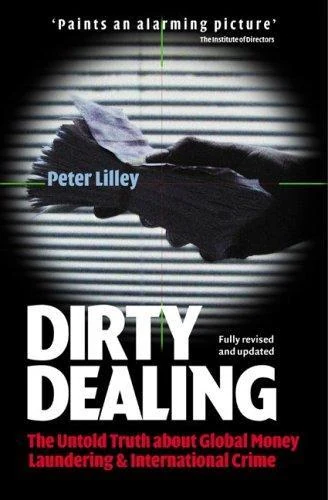
Dirty Dealing: The Untold Truth about Global Money Laundering, International Crime and Terrorism has been through multiple editions since first publication, updated as the typologies and the regulatory landscape have shifted. It is written for professionals across compliance, investigation and management rather than for specialists in any one of them.
Beyond the Book
Peter Lilley — financial crime specialist
- Edition currency matters here more than usual. Beneficial ownership registers, sanctions regimes and virtual-asset regulation have all moved substantially. The typologies hold; the regulatory and jurisdictional detail dates fast.
- The live sources: FATF publishes typology reports and mutual evaluation findings at no cost, and Transparency International publishes on corporate secrecy and beneficial ownership. Both are the current update on anything a book edition cannot cover.
- The investigative counterpart: Money Laundering: A Guide for Criminal Investigators by John Madinger, covered here, for the tracing method.
- Read alongside: How Spies Think by David Omand, for the analytical discipline to apply to a complex structure that may have been assembled to be misread.
Get your copy
Get your copy
Order Dirty Dealing on Amazon: find it here.