
The most efficient way to take money from people is not fraud. Fraud is illegal, prosecutable and eventually noticed.
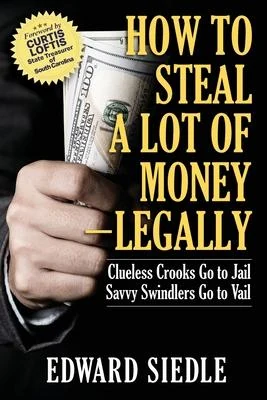
The efficient way is a fee structure nobody reads, in a document nobody is qualified to interrogate, governing a pool of money the beneficiaries cannot examine. Edward Siedle spent a career pulling those documents apart on behalf of pension beneficiaries, and his finding is that the largest losses in institutional finance are almost entirely lawful.
For anyone conducting financial due diligence, the transferable lesson is that the question “is this legal” is very nearly the wrong question.
What the book actually covers
Siedle's subject is the machinery through which institutional money is quietly diminished: layered management fees, undisclosed placement arrangements, performance calculations that flatter the manager, alternative investments whose true costs are not reported because reporting them is not required, and consultants whose independence is compromised by relationships they are not obliged to declare.
His method is document forensics. He obtains what the beneficiaries are entitled to see, identifies what is missing, and infers from the gaps. In his account, the absence of a document is frequently more informative than its contents — a fee schedule that cannot be produced, a side letter that is referenced but not disclosed, a valuation methodology nobody will put in writing.
The through-line is that opacity is not accidental. Complex structures are complex because complexity is profitable to somebody, and the party bearing the cost is invariably the one least equipped to examine it.
He is scathing about the professional ecosystem — the consultants, trustees and advisers who are nominally protecting the beneficiary and are structurally disinclined to look hard. Anyone who has watched a governance layer perform diligence rather than conduct it will recognise the picture.
Why it matters for your risk posture
Read it because “legal” is a floor, not a finding. Investment and counterparty diligence that stops at compliance verification has answered a narrow question. What the arrangement permits, who benefits from its complexity, and what is not being disclosed are separate enquiries, and they are where the money is.
Read it for the missing-document technique. Siedle's practice of cataloguing what should exist and is not produced is a genuinely transferable investigative move — applicable to counterparty diligence, to fund structures, and to any situation where you are being shown a curated subset of the record.
And read it for the conflicted-adviser problem, which is the part that generalises furthest. Wherever a professional is paid by one party to protect another, ask who selected them, who renews them, and what they earn from adjacent relationships. That question is uncomfortable and almost never asked.
Key takeaways
- The largest losses are lawful. Fraud gets prosecuted. Fee structures and disclosure gaps do the real damage and attract no attention.
- Complexity is a business model. If a structure is hard to understand, ask who profits from that difficulty. It is rarely the person bearing the cost.
- Absent documents are evidence. Catalogue what should exist. What cannot be produced tells you where to look.
- Ask who pays the adviser. Independence is a structural question, not a matter of character.
About the author
Edward “Ted” Siedle is a former attorney with the United States Securities and Exchange Commission and a former legal counsel in the investment management industry, who built a second career as a forensic investigator of pension plans and institutional money management.
Through his firm he has conducted investigations of public and private retirement plans on behalf of beneficiaries, participants and regulators, and has written extensively on pension fees, conflicts of interest and disclosure failures — including a long-running column for Forbes.
He has been publicly reported as a recipient of substantial whistleblower awards from United States regulators in connection with financial industry enforcement matters.
Beyond the Book
Edward Siedle — forensic pension investigator; former SEC attorney
- He has published widely. Siedle's investigative writing on pension fees, conflicts and disclosure has appeared across financial press and his own channels for years, and it is the working version of the book's method.
- He has conducted the investigations described. For any trustee or fiduciary who has never had an independent forensic review of a plan's fee and conflict structure, that is the actionable step this book points at.
- Read alongside: Money Laundering by John Madinger for the tracing method, and Crisis of Conscience by Tom Mueller — Siedle's cases frequently begin with someone inside deciding to speak.
Get your copy
Get your copy
Order How to Steal A Lot of Money — Legally on Amazon: find it here.