
Most of the executives we work with have, at some point, ignored an instinct that turned out to be right. A counterparty who felt wrong before the numbers confirmed it. A hire whose references were immaculate and whose manner was not. A situation that generated unease nobody could immediately justify.
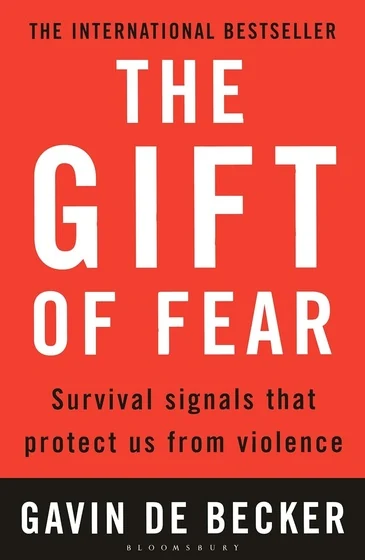
Gavin de Becker's argument, across a career spent protecting people from violence, is that the instinct was data. The unease was information arriving faster than the conscious mind could articulate it — and the mistake was overruling it in favour of what looked reasonable on paper.
What the book actually covers
De Becker's central concept is the pre-incident indicator — the observable behaviour that reliably precedes harm and that people routinely notice and then talk themselves out of. Violence, he argues, is far more predictable than we pretend, because it is preceded by signals that follow patterns. The failure is rarely one of detection. It is one of denial.
The book catalogues those signals in the contexts where they matter: the workplace, domestic settings, unwanted pursuit, the manipulative stranger. Several are directly transferable to a corporate risk setting. The unsolicited promise, which de Becker treats as a near-certain marker of intent to breach, because people only promise when they sense your doubt and want to override it. Forced teaming, the manufactured sense of a shared predicament used to accelerate false trust. Loan-sharking, the small unrequested favour that creates a sense of obligation. Anyone who has watched a social engineer work, or a fraudulent counterparty build rapport, will recognise all three.
Underneath the techniques is a single instruction: distinguish real fear, which is a response to a present signal, from worry, which is a story you tell yourself about the future. The first is useful and should be acted on. The second is noise and should be managed. Confusing the two is what leaves people both anxious and unprotected.
Why it matters for your risk posture
Read it because intuition is a screening tool that most organisations systematically suppress. De Becker's work is the best available argument that the instinct to investigate — the sense that something about a person or a deal does not reconcile — is a signal to be actioned rather than a discomfort to be smoothed over. In a due diligence context, that instinct is frequently the first indicator of something a formal process has not yet reached.
Read it for the manipulation taxonomy. The behaviours de Becker identifies in personal-safety settings map cleanly onto social engineering, insider threat and counterparty deception. The vocabulary alone is useful: naming forced teaming or the unsolicited promise in a live situation is the first step to resisting it.
And read it as a corrective to false reassurance. The most dangerous input in any assessment is the smooth explanation that resolves an anomaly a little too neatly. De Becker's whole method is built on refusing to let the plausible override the perceived, which is precisely the discipline that separates genuine diligence from box-ticking.
Key takeaways
- Intuition is analysis, delivered early. The unease that precedes evidence is the mind processing signals faster than it can explain them. Act on it, then verify.
- The unsolicited promise signals intent to breach. People promise when they sense doubt and want to override it. Treat the volunteered guarantee as a flag, not a comfort.
- Manufactured trust is a technique. Forced teaming and the unrequested favour are engineered to accelerate a relationship past the point where scrutiny is welcome.
- Fear is a signal; worry is a story. The first responds to something present and deserves action. The second is noise and deserves management.
About the author
Gavin de Becker is widely regarded as the foremost practitioner in the assessment of threats to public figures. He founded Gavin de Becker & Associates in 1978, and the firm has grown into a several-hundred-person operation providing threat assessment and protective services to at-risk clients worldwide — among them federal agencies, corporations, universities, and prominent individuals.
He designed the MOSAIC threat assessment method used to screen threats against Justices of the United States Supreme Court and members of Congress, served on advisory boards at the US Department of Justice and the California Department of Mental Health, and was a consultant on stalking behaviour in high-profile prosecutions.
The Gift of Fear: Survival Signals That Protect Us from Violence was published in 1997, spent sixteen weeks on the New York Times bestseller list, and remains the standard popular text on the prediction of violence.
Beyond the Book
Gavin de Becker — founder and chairman, Gavin de Becker & Associates
- The firm is the working system. Gavin de Becker & Associates provides threat assessment and protective intelligence to public figures and institutions internationally. The MOSAIC methodology is the operational version of the book's argument.
- His other books extend the method: Protecting the Gift, applying the same framework to children's safety, and Fear Less, written on threat and risk perception after 2001.
- He has spoken and been interviewed at length on protective intelligence and violence prediction, including long-form podcast appearances working through the book's core ideas.
- Read alongside: Spy the Lie — de Becker on reading behaviour that precedes harm, the CIA-trained authors on reading behaviour that accompanies deception. The two form a practical pairing on human-signal assessment.
Get your copy
Get your copy
Order The Gift of Fear on Amazon: find it here.