
Most memoirs by former intelligence officers are written to settle a reputation. Ric Prado's is unusual because the interesting material is procedural. Strip out the biography and what remains is a long, specific account of how clandestine work is actually organized: how people are assessed before they are trusted, how operations are planned around the assumption that something will fail, and how risk is carried by individuals rather than by systems.
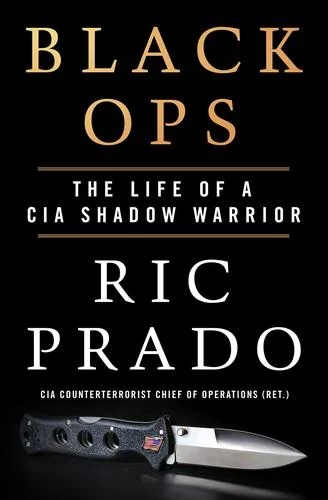
Prado spent roughly twenty-four years at the CIA, his first decade in its paramilitary arm, and served as chief of operations of the CIA's Counterterrorist Center. Black Ops is his account of that career. For a reader who assesses exposure for a living, the value lies less in the adventure than in watching an organization that treats verification, compartmentation and contingency as routine rather than as compliance overhead.
What the book actually covers
The arc runs from Prado's childhood in Cuba and his family's exile, through service as a US Air Force pararescueman, into the CIA's Special Activities Division and a series of postings — Central America during the Contra years, the Philippines, Korea — before the counterterrorism work that occupied the end of his career.
The operational content is the substance. Prado is detailed on how relationships with sources are built and, more importantly, how they are tested: the slow accumulation of small verifications, the deliberate inconsistencies introduced to see what comes back, the working assumption that a person's stated motive is rarely their whole motive. He is equally clear that this is not cynicism but process — you cannot run an operation on someone you have not independently corroborated, however plausible they are in the room.
He is candid about failure, and about how plans degrade, communications break, people do not behave as predicted, and the difference between a bad outcome and a catastrophe is usually whether a fallback existed and whether anyone had rehearsed it. The later chapters, covering the Counterterrorist Center, describe an organization attempting to reorganize itself around a threat it had already been warned about — a familiar shape to anyone who has watched a risk register fail to translate into action.
Why it matters for your risk posture
Read it for the vetting discipline. Prado's world runs on the premise that trust is granted incrementally and withdrawn cheaply, and that the moment you stop corroborating is the moment you are exposed. That is the same premise underneath executive background work and counterparty diligence, described here by someone for whom the consequence of getting it wrong was not financial.
Read it for the treatment of contingency. The book is a sustained argument that planning for the expected case is not planning. Operations are built around what happens when the primary route closes — a habit most commercial organizations only acquire after an incident.
And read it for the human factors. Prado is good on what sustained operational pressure does to judgment, on the cost of compartmentation to the people inside it, and on the organizational tendency to reward the visible over the careful. Those dynamics are not confined to intelligence services.
Key takeaways
- Trust is a process, not a judgment. Corroborate independently and repeatedly; the plausible source is the one worth checking hardest.
- A plan without a rehearsed fallback is a hope. The distinguishing feature of professional operations is what happens when the first option fails.
- Compartmentation has a cost, and it is paid by people. Restricting information protects the operation and isolates the operator; both effects are real.
- Warnings are not the scarce resource. The Counterterrorist Center chapters describe an institution that knew, and the gap between knowing and acting.
About the author
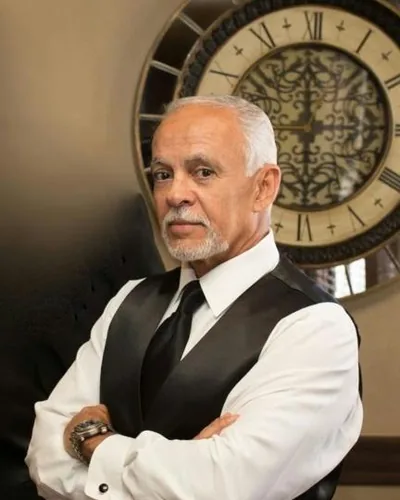
Enrique “Ric” Prado was born in Cuba and came to the United States as a child. He served in the US Air Force as a pararescueman before joining the Central Intelligence Agency, where he spent around twenty-four years, his first decade in the Special Activities Division, the Agency's paramilitary component.
His postings included Central America during the 1980s, the Philippines and Korea. He served as deputy chief of the Bin Laden Issue Station and later as chief of operations of the CIA's Counterterrorist Center. After leaving government service he worked in the private security sector.
Black Ops: The Life of a CIA Shadow Warrior was published by St. Martin's Press in 2022.
Where the proceeds go
We donate 100% of what we earn to Children of Fallen Heroes
If you buy through the link above we may earn a small commission, at no extra cost to you. Every penny of it goes to Children of Fallen Heroes, a registered 501(c)(3). We keep none of it.
They run an 82-acre campus for the children of military families, first responders and foster youth — STEAM education in aviation, robotics and drones, alongside leadership and healing programs. More than 15,000 young people and families have been through it in eleven years.
We participate in the Amazon Services LLC Associates Program and similar affiliate programs; these relationships do not influence our recommendations. Cookies and similar technologies record interactions with affiliate links — see our Privacy Policy to disable them, or reach us via Contact.