
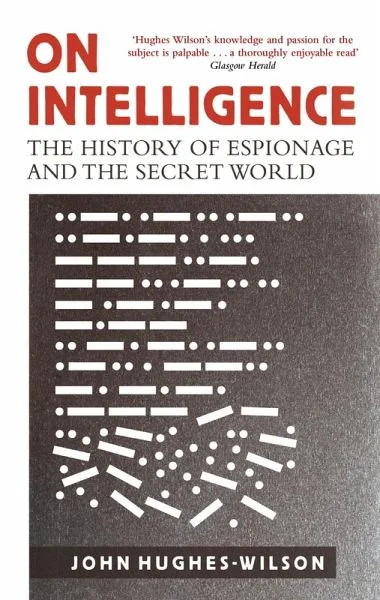
Most single-volume histories of espionage are organized around stories: the famous agent, the celebrated betrayal, the operation that worked. John Hughes-Wilson organizes On Intelligence around a process instead — collection, analysis, dissemination, and the decision the whole apparatus exists to inform — and the book is more useful for it.
Hughes-Wilson is a former colonel in British military intelligence, and the same author as Military Intelligence Blunders and Cover-Ups. The two books share a thesis. Intelligence rarely fails because nobody collected the material. It fails at the point where the assessment has to reach someone with the authority to act, and survive contact with what that person already believes.
On Intelligence is the broader of the two: a survey running from antiquity through the Cold War to the post-9/11 period, taking in signals intelligence, human sources, imagery, and the machinery of national assessment.
It is also the more uneven. The historical sweep is bought at the cost of depth, the later chapters carry more opinion than evidence, and the treatment of contemporary agencies is coloured by a practitioner's impatience with civilian oversight. Read it for the structural argument, not as a reference.
What the book actually covers
The organizing device is the intelligence cycle, and Hughes-Wilson takes each stage in turn with historical cases attached. Collection gets the most varied material: agents, intercepts, aerial and satellite imagery, open sources. His point throughout is that the disciplines are complementary and that over-reliance on any single one is a recurring institutional failure.
The analysis chapters are the book's center. Hughes-Wilson is good on the difference between information and assessment, and on why the second is harder to produce and easier to distort. He is particularly clear that analysis inherits the pressures of whoever commissioned it — a point he makes without the cynicism it usually attracts.
The dissemination material is where the two Hughes-Wilson books converge. Repeatedly, the assessment existed, was reasonably accurate, and did not change the decision. Sometimes it did not reach the decision-maker; more often it reached them and lost to a prior conviction.
The weakest sections are the contemporary ones. On modern agencies, oversight and the balance between security and liberty, Hughes-Wilson is writing polemic rather than history, and the sourcing thins accordingly. A reader should notice where the register changes.
Why it matters for your risk posture
Read it for the dissemination problem, which is under-examined in commercial intelligence precisely because it is nobody's job. Collection has an owner and analysis has an owner. Whether the finding actually altered a decision usually has no owner at all, and Hughes-Wilson's cases are a long argument that this is where the value is won or lost.
Read it for the multi-source discipline. His consistent finding is that single-source confidence is where institutions get hurt — one agent, one intercept, one satellite pass, treated as sufficient because it was vivid. The commercial equivalent is the single compelling document that ends an inquiry rather than opening one.
And read it for the commissioning problem. Hughes-Wilson is direct that assessments drift toward what the commissioner wants, and that the drift is rarely deliberate. If you buy intelligence, the question of what your provider believes you want to hear is a live one, and this book is a good way to start thinking about it.
Key takeaways
- Failures cluster at dissemination, not collection. The assessment usually existed; it did not land.
- Single-source confidence is the recurring wound. Vividness is not corroboration.
- Analysis inherits the pressures of whoever ordered it — usually without anyone intending it.
- The disciplines are complementary. Institutions that over-invest in one collection method get surprised in the others.
- Note where a historian turns polemicist. The contemporary chapters are argued, not evidenced.
About the author
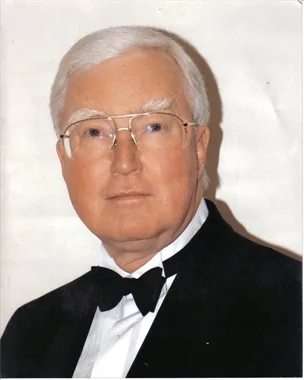
Colonel John Hughes-Wilson served in the British Army's Intelligence Corps, with operational experience in Northern Ireland, Cyprus and the Falklands, and later worked in NATO and Ministry of Defence intelligence roles. He has written extensively on military intelligence and its failures for a general readership.
His best-known book remains Military Intelligence Blunders and Cover-Ups, and readers who want one Hughes-Wilson title should start there: it makes the same argument with far tighter case work.

Where the proceeds go
We donate 100% of what we earn to Children of Fallen Heroes
If you buy through the link above we may earn a small commission, at no extra cost to you. Every penny of it goes to Children of Fallen Heroes, a registered 501(c)(3). We keep none of it.
They run an 82-acre campus for the children of military families, first responders and foster youth — STEAM education in aviation, robotics and drones, alongside leadership and healing programs. More than 15,000 young people and families have been through it in eleven years.
We participate in the Amazon Services LLC Associates Program and similar affiliate programs; these relationships do not influence our recommendations. Cookies and similar technologies record interactions with affiliate links — see our Privacy Policy to disable them, or reach us via Contact.