
Geopolitics: The Global Stage
Most business planning treats politics as background noise until a border closes, a currency is restricted, a sanctions list expands, or a local partner turns out to be politically exposed. Geopolitics rarely appears on a risk register, and it is one of the few risks that can invalidate an entire market entry at once. This piece covers how political change reaches the balance sheet, and what to watch for.
Geopolitics is where geography, power, culture and politics meet, and it reaches ordinary businesses far more often than most risk registers suggest. This piece covers how political change actually arrives at a company — usually not as a headline, but as a supplier who can no longer ship, a payment that will not clear, or a partner who has become a liability.
Geopolitics and Trade
One of the most significant ways geopolitics can impact businesses is through its influence on trade relationships between countries. Geopolitical tensions, such as trade wars, can disrupt global supply chains, leading to tariffs, trade barriers, and economic sanctions. These can profoundly impact businesses that rely on international trade to source inputs or export their products.
For example, in 2018, the United States imposed tariffs on steel and aluminum imports from several countries, including Canada, Mexico, and the European Union. This move sparked retaliation from these countries, leading to a trade war significantly impacting businesses that relied on these imports. As a result, companies that relied on steel and aluminum imports had to pay higher prices for these inputs, which increased their production costs and reduced their competitiveness.
Trade tensions reach consumer behavior too. For example, Chinese consumers boycotted products from several Western brands, including Nike and H&M, after statements about Xinjiang cotton. The boycotts hurt sales for companies that rely on Chinese consumers.
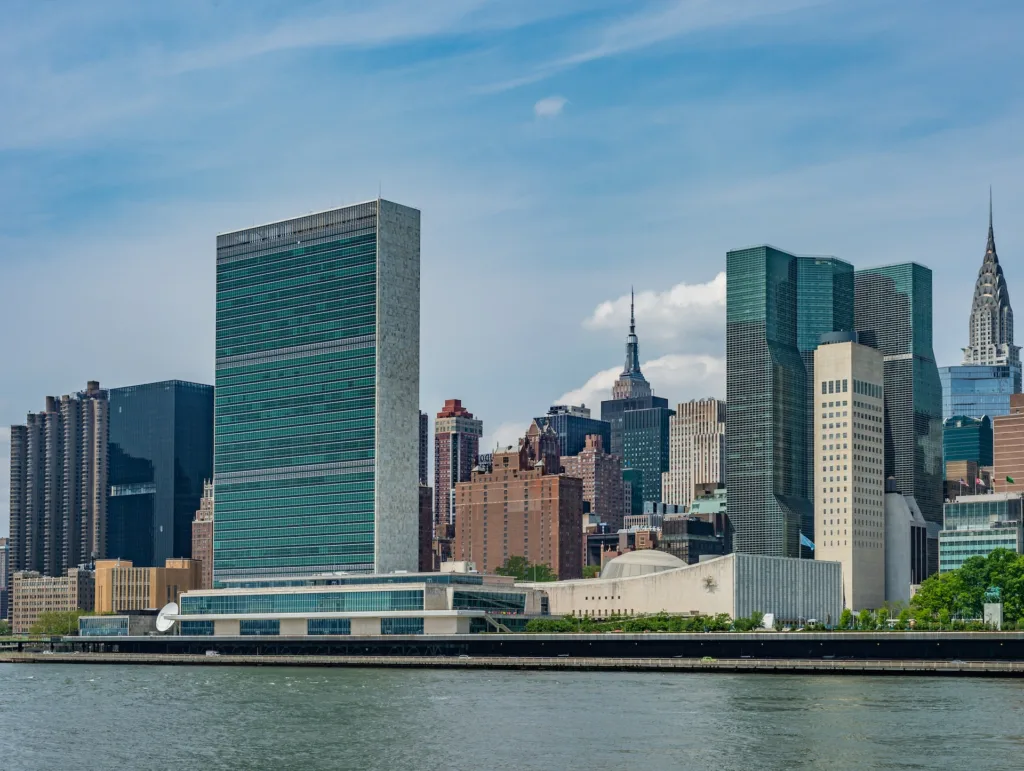
Sanctions and export controls are decided in settings like this one and arrive, months later, as a compliance problem inside firms that had no part in the decision. The exposure is rarely the headline measure; it is the second-tier supplier caught by it.
The Impact of Sanctions
The 2022 US sanctions and export restrictions targeting Russia include restrictions on exporting certain products, including software, technology, and oil exploration or production equipment. In addition, these sanctions have implications for US and non-US companies that do business with or in Russia, as they may be prohibited from exporting certain products or face increased scrutiny from US regulators.
In addition, the US government has increased its enforcement efforts in recent years, and companies that violate the sanctions can face significant penalties, including fines and imprisonment. A 2023 development was the introduction of language that covers the 'enablers' of sanctioned individuals and companies.
Stalling Investment
Geopolitics can also impact investment opportunities for businesses. For example, political instability or conflict can discourage investment in a particular country or region, reducing economic growth and investment opportunities. For example, the years of conflict in Syria significantly impacted the country's economy, leading to a decline in investment and economic activity. The decline has, of course, also impacted its neighbors and the wider region.
Similarly, geopolitical tensions can also impact the availability of financing for businesses. For example, economic sanctions can make it difficult for companies to access financing from international banks. Again, this can impact businesses of all sizes, from small startups to large multinational corporations.
Growing and Changing Regulations
Geopolitics can also influence business operations regulations and policies, including environmental regulations, labor laws, and taxation. For example, in response to the growing threat of climate change, many countries are introducing new regulations and policies aimed at reducing greenhouse gas emissions. These regulations can impact businesses that rely on carbon-intensive activities, such as the oil and gas industry.
Likewise, political shifts can also impact labor laws and regulations. For example, changes in government can lead to changes in labor laws, which can impact businesses' labor costs and productivity.
Geopolitics Risk Management
Businesses need to assess and manage risks associated with geopolitical factors such as political instability, terrorism, and cyber threats. These risks can impact businesses of all sizes, from small startups to large multinational corporations.
For example, in 2014, a cyberattack on Sony Pictures Entertainment resulted in the theft of confidential information and the release of sensitive emails. This incident highlighted the growing threat of cyberattacks from state-sponsored groups to enterprising private outfits specialized in encrypting data for ransom. As a result, the need for businesses to protect themselves against such threats has never been higher.
Similarly, businesses need to be aware of the risks associated with political instability and terrorism. In some regions of the world, such as the Middle East and North Africa, political instability and terrorism are significant risks that can impact business operations.
Opportunities in new Markets
The same analysis that identifies risk also identifies where to go next. China absorbed most attention for two decades, but Vietnam, Indonesia and the Philippines have all grown quickly, and the pairing that matters for anyone committing capital for a decade is growth with political stability, which these markets have offered to differing degrees. Reading political trends is how you find those markets before the consensus does — and how you notice when one stops qualifying.
To take advantage of these new market opportunities, businesses must prepare to invest significantly in local infrastructure, develop partnerships with local businesses, and conduct thorough market research. By investing in local infrastructure, companies can help to improve the region's transport, communication, and energy systems, which can facilitate their operations and help to stimulate further economic growth.
Local partners are the fastest route to understanding a market and the most common source of unexamined risk in one. They are worth having, and worth checking — the same diligence you would run on a domestic counterparty, applied to someone whose record sits in a language and a registry you do not read.

Political risk is one of the few exposures that can invalidate an entire market entry at once rather than degrade it gradually. That asymmetry is the argument for holding a considered view of a market before committing to it, instead of reacting once the route is already taken.
So what can businesses do to mitigate these geopolitical risks actively?
Political risk is one of the few exposures that can invalidate an entire market entry at once, which is a reason to hold a view on it rather than to react to it. The question for a board is narrow: which of our operations depend on a political arrangement continuing, and what is the plan if it does not?
Businesses must take steps to mitigate the risks associated with geopolitical factors, such as political instability, terrorism, and cyber threats. This can include investing in cybersecurity measures, diversifying supply chains, and seeking out new market opportunities.
The same instability that closes one market opens another, usually to whoever was already paying attention. Political analysis is not only defensive work.
Understanding the relevance of geopolitics for businesses is essential for companies of all sizes. By staying informed about geopolitical trends and developments, businesses can mitigate risks and identify new opportunities, positioning themselves for long-term growth and success in an increasingly complex and interconnected world.
Businesses can follow and implement the advice outlined in this article by taking the following steps:
- Stay informed: Businesses must stay informed about geopolitical trends and developments that may impact their operations, including reading news articles, following social media accounts of experts in the field, and attending conferences and events focused on geopolitical issues.
- Conduct risk assessments: Businesses must conduct risk assessments to identify the risks associated with geopolitical factors, such as political instability, terrorism, and cyber threats, including assessing the potential impact of these risks on business operations and developing strategies to mitigate these risks.
- Diversify supply chains: Businesses can reduce the risks associated with geopolitical factors by diversifying their supply chains, including sourcing inputs from multiple countries or regions rather than relying on a single source.
- Invest in cybersecurity: As cyber threats continue to grow, businesses must invest in cybersecurity measures to protect against cyberattacks, including implementing firewalls, antivirus software, and data encryption tools, among other measures.
- Seek out new market opportunities: By staying informed about geopolitical developments, businesses can identify new market opportunities in emerging markets or regions, including conducting market research, developing partnerships with local businesses, and investing in local infrastructure.
- Develop contingency plans: Businesses need to develop contingency plans to address the potential impact of geopolitical risks on their operations, including developing emergency response plans, establishing communication protocols, and identifying alternative sources of inputs or financing.
- Implementing compliance programs: Businesses should implement compliance programs to ensure that they comply with the sanctions and export restrictions, including implementing policies and procedures to monitor transactions, conducting due diligence on customers and suppliers, and training employees on the requirements of the sanctions.
- Monitoring transactions: Businesses should monitor their transactions for potential violations of sanctions and export restrictions, including conducting regular audits of transactions and reviewing customer and supplier lists for potential red flags.
None of this requires a dedicated political risk function. It requires that somebody in the business is responsible for holding the view, that the view is written down, and that it gets revisited on a schedule rather than after an event.
Falcone International
Bring us a question like this one
We handle corporate investigations, due diligence, financial investigations and duty of care — usually for people who need something established quietly, and established properly, before it turns into a problem.