
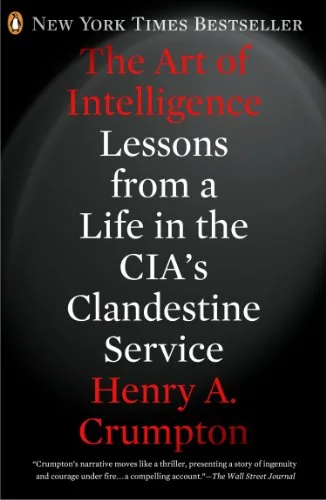
In the opening phase of the Afghanistan campaign in 2001, small teams of CIA officers and US Special Forces were working with Afghan commanders whose loyalties had to be assessed one at a time, calling in air power against an enemy that outnumbered them by orders of magnitude. Henry Crumpton was given the job of organizing that campaign in the days after 11 September, and The Art of Intelligence is his account of how it was run.
The book is a memoir of twenty-four years in the CIA's Clandestine Service, published by Penguin Press in 2012. It moves from Crumpton's first recruitments in Africa through the Counterterrorist Center, the early development of the armed Predator, and the Afghan campaign, to eighteen months at the State Department as Coordinator for Counterterrorism.
Crumpton’s account is especially useful on how case officers consider a source’s motives, and how an organization decides whether it can act on what the source reports.
The CIA’s Publications Review Board cleared the memoir. Crumpton gives an insider’s account of the Predator program and the early Afghanistan campaign, two areas where independent scrutiny was difficult. The book gives less attention to the campaign’s longer consequences.
Summary
The Art of Intelligence is Henry Crumpton’s account of his CIA career as a case officer, ending with the Afghanistan campaign he was asked to organize after 11 September 2001. Its strongest material is on tradecraft, on how sources are spotted, assessed and recruited. Crumpton insists that a source’s information is worth only as much as one’s understanding of why they are providing it. He also describes how the Agency’s human intelligence capability decayed in the 1990s through budget cuts and risk aversion that each looked defensible. The Afghan chapters describe a very small team choosing which local commanders to back. Readers take away a source-validation method, from an authorized account that says little about the campaign’s longer consequences.
What the book covers
Three strands, unevenly weighted. The first is tradecraft: how Crumpton learned to spot, assess, develop and recruit sources, and how he thinks about the difference between a source who is useful and a source who is merely productive. This is the strongest material and the least discussed.
The second is institutional. Crumpton is direct about the CIA's condition through the 1990s — the budget cuts, the risk aversion that followed the Cold War, the reluctance to put officers into places where they might be killed or embarrass the Agency. His argument is that the capability degraded quietly, over years, and that nobody noticed until it was needed.
The third is Afghanistan, and it is written as a case study in unconventional command: a very small number of people, an ally whose interests overlapped only partly with American ones, and a plan that depended on reading local politics correctly. The chapters on choosing which commanders to back are particularly useful for understanding choices made with limited local information.
Crumpton concentrates on the opening phase of the campaign and shows how the approach worked at that stage. What became of the alliances and what the later reliance on local proxies cost are questions beyond the period he describes in depth.
Implications for risk management
Crumpton’s approach to evaluating sources starts with why someone is willing to provide information. The same question can help an investigator decide how much weight to give a document in a commercial inquiry.
Crumpton also explains how a capability can decline through choices that make sense individually. In his account of the CIA in the 1990s, decisions on cost and risk accumulated until the Agency had lost expertise it would later need.
The account shows what a small team can do when it has the authority to decide quickly. The speed and autonomy that helped the team achieve its early objectives also raise a question for leaders planning a fast-moving operation. When will there be time to review the commitments made under pressure?
Crumpton’s chapters on choosing which Afghan commanders to back describe, at far higher stakes, the judgment a company makes in selecting a local partner. That choice is often made in a market where the public record is thin. Our political risk assessments take the same approach to sourcing, weighing what people in the market tell us against an understanding of why they are telling it. For each counterparty we set out what is established, what is likely and what remains contested.
Key takeaways
- A source’s motives help determine how much weight their account deserves. That assessment can guide what to corroborate before acting.
- Capabilities can erode through a series of smaller decisions. Crumpton describes how a decade of choices about cost and risk left the Agency with less human intelligence capacity.
- Small teams with real authority move fast in both directions. The structure that produced the result also produced the unexamined commitments.
- Local knowledge is the scarce input. The campaign turned on judgments about which Afghan commanders would hold, which no amount of collection could have substituted for.
- The memoir is an insider account with a defined scope. Crumpton gives his perspective on decisions he helped make and spends less time on their longer consequences.
About the author
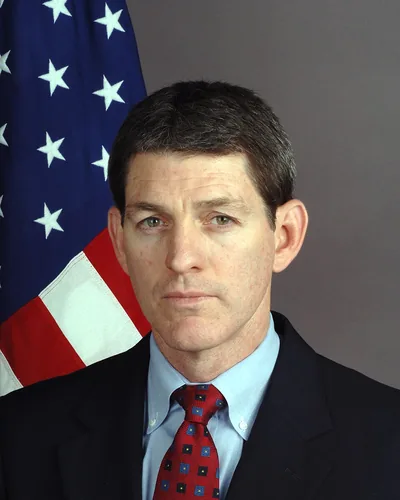
Henry A. "Hank" Crumpton served in the CIA from 1981 to 2005 — a twenty-four-year career in the Clandestine Service, with overseas postings, including in Africa, and senior roles in the Counterterrorist Center. He was involved in the development of the Predator unmanned aircraft program, and in the days after 11 September 2001 was tasked with organizing and leading the Agency's Afghanistan campaign.
He left the CIA in 2005 and served as the State Department's Coordinator for Counterterrorism, with the rank of Ambassador-at-Large, from August 2005 to February 2007. He subsequently founded a private advisory firm.
Where the proceeds go
We donate 100% of what we earn to Children of Fallen Heroes
If you buy through the link above we may earn a small commission, at no extra cost to you. Every penny of it goes to Children of Fallen Heroes, a registered 501(c)(3). We keep none of it.
They are developing an 82-acre campus in Vass, North Carolina for the children of military families, first responders and foster youth — STEAM education in aviation, robotics and drones, alongside leadership and healing programs. Over eleven years their programs have reached more than 15,000 young people and families.
We participate in the Amazon Services LLC Associates Program and similar affiliate programs; these relationships do not influence our recommendations. Cookies and similar technologies record interactions with affiliate links — see our Privacy Policy to disable them, or reach us via Contact.