
1Malaysia Development Berhad, known as 1MDB, was a Malaysian state investment fund set up in 2009 to promote economic development through foreign partnerships and investment. US prosecutors allege that more than US$4.5bn was misappropriated from it between 2009 and 2015. They say a sequence of transactions took money raised for the fund into shell companies, private bank accounts and the purchases of a small group of people around the financier Jho Low.
The case has since produced the largest action brought under the US Justice Department's Kleptocracy Asset Recovery Initiative, a deferred prosecution agreement and a guilty plea by a Goldman Sachs subsidiary, and the closure of two private banks in Singapore. It also led to two criminal convictions of Malaysia's former prime minister, Najib Razak, the second of them under appeal. This explainer sets out how the money is alleged to have moved, why the institutions positioned to stop it did not, and where the cases stood in late October 2026. It accompanies our review of Billion Dollar Whale, the account by the Wall Street Journal reporters Tom Wright and Bradley Hope.
The 1MDB scandal in brief
1MDB began as the Terengganu Investment Authority, a state vehicle formed in February 2009, and was taken over by the federal finance ministry in July 2009 and renamed 1MDB in September 2009. Najib, who was then prime minister and finance minister, chaired its advisory board. According to US prosecutors, Jho Low held no formal position at the fund. He had been named a special adviser to its predecessor in April 2009, advised on its first borrowing and, the prosecutors say, directed much of what followed.
Over the next six years the fund borrowed heavily, including about US$6.5bn raised through three bond offerings in 2012 and 2013 that Goldman Sachs underwrote. By mid-2015 its debts stood at about US$11bn, according to the Wall Street Journal. Reporting by Sarawak Report, The Edge and the Wall Street Journal in 2015 traced money from the fund's deals into private accounts, including nearly US$700m into accounts that investigators believed were Najib's. Najib denied wrongdoing and was cleared by Malaysia's attorney general in January 2016; after he lost the general election in May 2018, he was charged.
1MDB timeline
| Date | Event |
|---|---|
| February 2009 | The Terengganu Investment Authority is formed; the federal finance ministry takes it over in July 2009 and it is renamed 1MDB in September 2009. |
| September 2009 | 1MDB agrees a joint venture with PetroSaudi. By The Edge's count, US$700m goes on 29 September to Good Star, a company US prosecutors say Jho Low beneficially owned; the Justice Department puts the total moved to the Good Star account by 2011 at more than US$1bn. |
| 2012 to 2013 | Goldman Sachs underwrites three 1MDB bond offerings raising about US$6.5bn; with related business it earns about US$606m in fees and revenue, according to the Justice Department. |
| March 2013 | Two payments, of US$620m and US$61m according to the Justice Department, reach accounts in Najib's name. |
| 2015 | Sarawak Report, The Edge and, on 2 July, the Wall Street Journal report on the fund's transactions. Malaysia blocks Sarawak Report and suspends The Edge's publishing permits; the attorney general is replaced. |
| 26 January 2016 | Malaysia's new attorney general clears Najib, describing the US$681m as a donation from the Saudi royal family. |
| 2016 | Singapore's central bank shuts down BSI Bank and Falcon Bank's Singapore operations. On 20 July the US Justice Department files civil forfeiture actions seeking more than US$1bn of assets. |
| 30 May 2017 | The Monetary Authority of Singapore completes its review, with penalties of S$29.1m on eight banks. |
| May to November 2018 | Najib loses the general election and is charged in July. The US announces charges against Jho Low and the former Goldman bankers Tim Leissner and Roger Ng; Leissner had pleaded guilty in August. |
| 28 July 2020 | Najib is convicted in the SRC International case and sentenced to 12 years and a RM210m fine. |
| 2020 | Malaysia and Goldman Sachs settle for US$3.9bn. On 22 October Goldman enters a deferred prosecution agreement with the Justice Department, part of a resolution of more than US$2.9bn, and its Malaysian subsidiary pleads guilty. |
| 2021 | AmBank agrees to pay RM2.83bn and Deloitte RM336m to the Malaysian government; KPMG agrees to pay RM333m. |
| 23 August 2022 | The Federal Court upholds Najib's SRC conviction, and he begins his sentence. |
| March 2023 | Roger Ng, convicted by a Brooklyn jury in April 2022, is sentenced to ten years. |
| 2 February 2024 | Malaysia's Pardons Board announces that it has halved Najib's SRC sentence to six years and cut the fine to RM50m; it decided on 29 January. |
| 29 May 2025 | Tim Leissner is sentenced to two years in prison. |
| 26 December 2025 | The Kuala Lumpur High Court convicts Najib on all 25 charges in the main 1MDB case and sentences him to 15 years, to run after the SRC sentence. He is appealing. |
| 18 September 2026 | Najib receives a conditional pardon allowing him to serve the rest of the SRC sentence under house arrest, once the RM50m fine is paid. |
| November 2026 | Umno pays the RM50m fine on 6 November, and on 10 November Najib is moved from Kajang prison to house arrest at his home in Kuala Lumpur. |
How the money moved
US prosecutors describe four phases, named for the Good Star account, the Aabar-BVI company, the Tanore account and a 2014 options buyback. The first three are set out below. Each relied on counterparties accepting a description of a transaction instead of testing it.
Good Star and the PetroSaudi joint venture
In September 2009 1MDB agreed to put US$1bn into a joint venture with PetroSaudi, a private oil company. According to The Edge's analysis of the documents, about US$700m of that money went not to the venture but to Good Star, a Seychelles company that US prosecutors say Jho Low beneficially owned. PetroSaudi has denied fraud in the venture; in August 2024 a Swiss federal court convicted two of its executives, Tarek Obaid and Patrick Mahony, of fraud and money laundering at first instance, and both said they would appeal.
The look-alike company
Between 2012 and 2014 1MDB said it paid about US$3.5bn to Aabar Investments PJS Ltd, a company registered in the British Virgin Islands. Its name closely matched Aabar Investments PJS, a genuine subsidiary of the Abu Dhabi fund IPIC that had guaranteed 1MDB's 2012 bonds. In April 2016 IPIC and Aabar said they did not own the British Virgin Islands company and had received no payments from it. A registry search on the payee would have shown a different company in a different jurisdiction, which is the kind of check a payment of that size should never skip.
Tanore and the payments to Najib
In March 2013 two payments of US$620m and US$61m reached accounts in Najib's name at an AmBank group bank. They came from Tanore Finance Corporation, a company in the British Virgin Islands, through its account at the Singapore branch of the Swiss bank Falcon Private Bank. Najib's defense was that the money was a donation from the Saudi royal family, and that about US$620m was later returned. In December 2025 the Kuala Lumpur High Court rejected that defense, found the donation letters forged and found that Najib had been the top decision-maker at 1MDB. He is appealing and continues to deny wrongdoing.
Where it was spent
The assets the Justice Department sought to forfeit included film rights, among them interests in The Wolf of Wall Street through Red Granite Pictures, which paid US$60m in 2018 to settle without admitting wrongdoing. They also included property in Beverly Hills, New York, London and Paris; works by Picasso, Basquiat, Monet and Warhol; and the superyacht Equanimity, which Malaysia later sold for US$126m.
Why the checks failed
The bank that raised the money
In its October 2020 agreement Goldman Sachs admitted, as the Justice Department summarized it, that red flags "either were ignored or only nominally addressed so that the transactions would be approved". It also admitted that staff in its control functions knew that any transaction involving Jho Low posed a significant risk without taking reasonable steps to ensure he was not involved. The Justice Department alleged that the co-conspirators paid the bribes with more than US$2.7bn diverted from the three bond offerings Goldman underwrote. The Justice Department reduced the credit it gave for cooperation because Goldman had significantly delayed producing relevant evidence.
The auditors
1MDB went through three audit firms in five years. Ernst & Young was removed in 2010 after declining to sign the accounts without documents on the PetroSaudi venture, according to Malaysia's auditor-general as reported by The Edge. KPMG signed the accounts for 2010 to 2012 and in June 2018 told 1MDB that those reports should no longer be relied on. Deloitte, which audited 2013 and 2014, said in July 2016 that the information in the US complaints would have affected those statements had it been known. A change of auditor at a state fund is a finding in itself, and the removal of the first auditor in 2010, over documents on the PetroSaudi venture, should have prompted questions before the bond issues that followed.
The private banks
Much of the money moved through private banks in Singapore and Switzerland that accepted large transfers on the strength of the client's explanation. Singapore's central bank closed the local operations of BSI and Falcon in 2016, penalized eight banks in 2017 and banned several former bankers from the industry. In Switzerland, JPMorgan's local unit received a penalty order in August 2025 for failing to prevent aggravated money laundering, and the group paid Malaysia RM1.4bn without admitting liability.
The political setting
The fund reported to the finance ministry, which the prime minister also held, and its advisory board was chaired by him. When reporters began to publish in 2015, the government blocked a news site, suspended a newspaper group's permits and replaced its attorney general. Where a counterparty's governance runs to a politically exposed person who also controls the bodies that would investigate it, domestic oversight cannot be relied on, and the diligence has to be done from outside.
Where the 1MDB cases stand
Najib's conviction in the SRC International case is final. The Pardons Board halved the sentence in February 2024, and on 18 September 2026 he received a conditional pardon allowing him to serve the rest of it, to 23 August 2028, under house arrest once the RM50m fine was paid. Umno paid the fine on 6 November 2026, and on the night of 10 November 2026, after the High Court set aside its 6 November order and issued a fresh one, Najib was moved from Kajang prison to house arrest at his home in Kuala Lumpur. On 10 November 2026 the Malaysian Bar applied to the High Court for leave to seek judicial review of the Pardons Board's house-arrest decision, and the court will hear the Attorney-General's Chambers' objection to that application on 17 March 2027. His conviction in the main 1MDB case, with a 15-year sentence due to begin after the SRC sentence and fines of about RM11.38bn, is under appeal, and on 14 October 2026 the High Court refused to stay that sentence pending the appeal.
Goldman Sachs's Malaysian subsidiary pleaded guilty in the United States, while the parent company entered a three-year deferred prosecution agreement, which suspends a prosecution on conditions; the agreement expired in October 2023 and the court dismissed the charge against the parent in May 2024. Goldman began arbitration against Malaysia in October 2023 over the US$1.4bn asset-recovery guarantee in their 2020 settlement, and Malaysia's finance ministry said in October 2025 that the arbitration was continuing. Tim Leissner, the former head of Goldman's Southeast Asia business, began a two-year sentence in February 2026. Roger Ng's conviction and ten-year sentence were affirmed on appeal in December 2025.
Jho Low has been charged in the United States and Malaysia, denies wrongdoing and has not been tried; his whereabouts are unknown. In settlements with the Justice Department in 2019 and 2024 he and his family gave up assets in the United States, Britain, France, Switzerland, Singapore and Hong Kong without those agreements resolving the criminal charges. The Justice Department said in June 2024 that it had returned about US$1.4bn to Malaysia, and Malaysia's anti-corruption commission said in May 2026 that RM31.3bn of the RM42bn it counts as misappropriated had been recovered.
Red flags a due diligence process can test
- An influential person without a formal role. When someone with no position at a counterparty is directing its transactions, the first questions are who that person is, what they are being paid and through which entities.
- A payee that is almost the right company. A name that matches a known institution is not an identity. Confirm the registration number, jurisdiction and ownership of every material payee against the registry, not against the invoice.
- Proceeds that leave the stated purpose. Money raised for a joint venture, an acquisition or a power plant should be traceable to that purpose. When it moves to third parties instead, the explanation needs documents from outside the transaction.
- Auditors and advisers who come and go. Resignations, removals and withdrawn opinions are among the few governance signals visible from outside a private or state-owned entity.
- Fees out of proportion to the work. Unusually high fees can indicate that an intermediary is being paid for something other than the service described.
- Political exposure at the top of the structure. A politically exposed person with authority over both the entity and the bodies that would investigate it means domestic assurance carries little weight.
How Falcone applies this
1MDB is a case about intermediaries accepting a description in place of evidence, and the recoveries that followed have so far taken more than a decade of tracing through the same structures. In due diligence on counterparties and partners, identity, ownership and political exposure are established from registries and records rather than from the documents a counterparty provides. In financial investigations and asset searches and recovery support, the same method follows funds after the fact; our guide to asset tracing explains how that work is done and what the courts can order.
Books and film about 1MDB
Billion Dollar Whale by Tom Wright and Bradley Hope
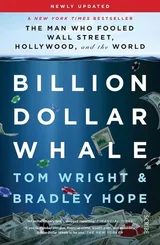 Published by Hachette Books in September 2018, Billion Dollar Whale: The Man Who Fooled Wall Street, Hollywood, and the World follows Jho Low from school in England to the yacht and the parties. In our view it is the most complete English-language account of how the money moved. It predates the convictions and settlements of the following years, which this explainer brings up to date.
The Sarawak Report by Clare Rewcastle Brown
The Sarawak Report: The Inside Story of the 1MDB Exposé, published in Malaysia in 2018, is the account of the British journalist whose website published the PetroSaudi documents in 2015 and which the Malaysian government blocked.
Man on the Run
Cassius Michael Kim's documentary was released in cinemas in the United States in September 2023 and reached Netflix in January 2024. It includes interviews with Najib, recorded before he began his sentence, and with Rewcastle Brown.
For the same failure in another market, our review of The Key Man, on the Abraaj Group, shows how auditors, regulators and investors deferred to a persuasive account.
Frequently asked questions
What was the 1MDB scandal?
1MDB was a Malaysian state investment fund set up in 2009. US prosecutors allege that more than US$4.5bn was misappropriated from it between 2009 and 2015 through shell companies and private bank accounts, much of it, they say, directed by the financier Jho Low. The case led to criminal convictions of former prime minister Najib Razak, one of them under appeal, and of former Goldman Sachs bankers, and to settlements by Goldman Sachs, banks and auditors.
How much money was stolen from 1MDB?
The US Justice Department alleges that more than US$4.5bn was misappropriated between 2009 and 2015. Malaysia's anti-corruption commission counts RM42bn as misappropriated and said in May 2026 that RM31.3bn had been recovered. The two figures use different bases and should not be compared directly.
What was Goldman Sachs's role in 1MDB?
Goldman Sachs underwrote three 1MDB bond offerings in 2012 and 2013 that raised about US$6.5bn; with related business it earned about US$606m in fees and revenue, according to the Justice Department. In October 2020 it entered a three-year deferred prosecution agreement with the US Justice Department (the charge against the parent was dismissed in May 2024 after it complied), its Malaysian subsidiary pleaded guilty, and it admitted that red flags were ignored or only nominally addressed. Two of its former bankers, Tim Leissner and Roger Ng, were convicted.
Where is Jho Low now?
Jho Low's whereabouts are unknown. He has been charged in the United States and Malaysia, denies wrongdoing and has not been tried. He has settled civil forfeiture cases with the US Justice Department, which did not resolve the criminal charges.
Is Najib Razak in prison?
Since 10 November 2026 Najib has been serving the rest of his sentence in the SRC International case, which the Pardons Board halved in 2024, under house arrest at his home in Kuala Lumpur instead of in Kajang prison. The move followed a conditional pardon granted on 18 September 2026 and the payment of a RM50m fine on 6 November 2026, and the house arrest runs to 23 August 2028. He was separately convicted in the main 1MDB case in December 2025 and sentenced to 15 years, a sentence he is appealing.
What is the best book about 1MDB?
Billion Dollar Whale by Tom Wright and Bradley Hope, published in 2018, is, in our view, the most complete English-language account. The Sarawak Report by Clare Rewcastle Brown tells the story from the journalist whose website published the PetroSaudi documents in 2015.
Falcone International
Bring us a question like this one
We handle corporate investigations, due diligence, financial investigations and duty of care — usually for people who need something established quietly, and established properly, before it turns into a problem.