
Abraaj's investors were not amateurs. They included sovereign wealth funds, pension plans, development finance institutions and a major philanthropic foundation. The firm was regulated, audited, board-governed and advised by name-brand firms. It collapsed anyway, in 2018.
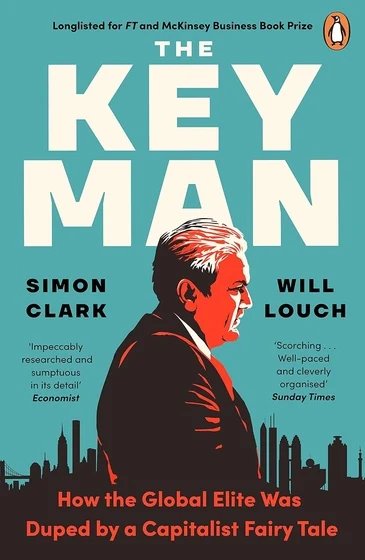
The Key Man is the account of that collapse by Simon Clark and Will Louch, who covered the story for The Wall Street Journal. For anyone responsible for capital or counterparty exposure it works as a case study in one failure mode: a compelling story standing in for verification.
Arif Naqvi, the firm's founder, argued that private capital could earn competitive returns in emerging markets while building hospitals, generating power and creating jobs. The book does not attack that argument. Its subject is what happened when belief in it replaced evidence about the organization advancing it.
What the book actually covers
Clark and Louch trace Naqvi's rise from Karachi to Dubai and the building of Abraaj into one of the best-known private equity managers in emerging markets. The persona is the engine: an unusually effective communicator, at ease at Davos, who framed emerging-market investment as a moral project as much as a financial one. The authors show why serious people found him persuasive.
The second strand is the investor base. Alongside sovereign funds and pensions sat development finance institutions with public mandates, including the International Finance Corporation and the UK's CDC Group. That composition became a credential in its own right: money from institutions with public obligations and their own diligence teams read to later investors as verification already performed.
The third strand is the collapse. In 2018, investors in the Abraaj Growth Markets Health Fund — among them the International Finance Corporation and the Bill & Melinda Gates Foundation — asked what had become of capital drawn down but not apparently deployed as described. They commissioned forensic accountants. A liquidity crisis followed, then provisional liquidation in the Cayman Islands.
The fourth strand is legal, and the authors handle it with unusual discipline. What is established is on the record: the firm collapsed; United States prosecutors brought criminal charges in 2019 against Naqvi and several former executives, including fraud counts; Naqvi was arrested in the United Kingdom that year. A UK court ruled in favor of extradition in 2021, the Home Secretary approved the order, and in March 2023 the High Court refused him permission to seek judicial review. Other parts of the record are settled too. In July 2019 the Dubai Financial Services Authority fined two Abraaj entities a combined $315 million — its largest penalty — on findings that the fund manager had misled investors and used investor money to cover its own costs. Two former Abraaj executives, Mustafa Abdel-Wadood and Sev Vettivetpillai, pleaded guilty in New York to fraud-related counts. What is contested remains contested as to Naqvi himself: the criminal charges against him are allegations, he has not stood trial, and he denies wrongdoing. The book also declines to reduce the episode to one individual. Auditors, boards, placement agents and investment committees all appear, and most did nothing especially unusual. That is the uncomfortable part.
Why it matters for your risk posture
Read it for the mechanics of borrowed credibility. A development institution on the register, a foundation in the fund, a Big Four signature on the accounts: each carries weight; none is diligence performed on your behalf. Reputational co-investment is a correlation, not a control. The question for an investment committee or family office is narrow — what did this organization verify itself, on what evidence, and when?
Read it because none of the warning signs were exotic. The DFSA's 2019 findings, Deloitte's 2018 review and the authors' reporting describe a familiar set: authority concentrated in one person; funds and the management company sharing a treasury function; cash borrowed to lift bank balances shortly before a reporting date; valuations difficult to test against anything observable; a culture in which challenging the founder carried a cost. Each is testable in advance.
Read it for what finally worked. The failure was surfaced not by ratings, screening databases or an audit opinion, but by investors who noticed that reported activity did not match observable activity and paid for forensic accounting rather than accept an explanation. That is the question we are usually asked after the money has moved.
Key takeaways
- Co-investor quality is not diligence. Sophisticated institutions in a fund tell you about their appetite, not their findings. Ask what each of them verified.
- Key-man dependence is a governance defect, not a personality note. Where one person controls narrative, valuation and cash movement, the control environment has already failed.
- Test the timing, not just the totals. Balances and deployment schedules that reconcile only at reporting dates are cheap to check and unusually revealing.
- Escalation needs someone willing to be unpopular. Give an unresolved question a route to a decision-maker that bypasses the person it concerns.
About the authors
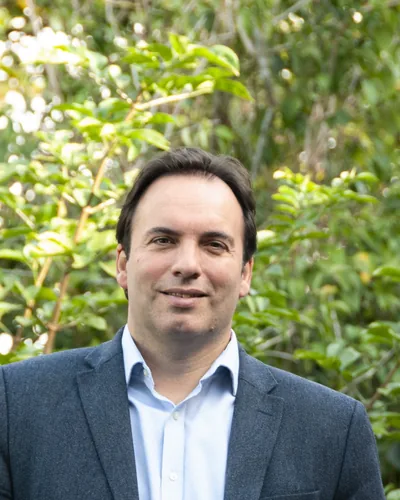
Simon Clark and Will Louch covered private equity for The Wall Street Journal from London and New York; their reporting from 2018 onward brought the health fund questions into public view. The book grew out of that reporting, and it shows: sourcing is attributed, competing accounts are set against each other, gaps are not filled with invention.
Readers wanting a verdict will find it frustrating. Readers wanting a reconstruction of how diligence failed at scale will not.
The Key Man: The True Story of How the Global Elite Was Duped by a Capitalist Fairy Tale, by Simon Clark and Will Louch, published by Harper Business in the United States, 2021 (published in the United Kingdom by Penguin Business as The Key Man: How the Global Elite Was Duped by a Capitalist Fairy Tale).
Get the book
The Key Man: The True Story of How the Global Elite Was Duped by a Capitalist Fairy Tale
Find it on Amazon
Where the proceeds go
We donate 100% of what we earn to Children of Fallen Heroes
If you buy through the link above we may earn a small commission, at no extra cost to you. Every penny of it goes to Children of Fallen Heroes, a registered 501(c)(3). We keep none of it.
They run an 82-acre campus for the children of military families, first responders and foster youth — STEAM education in aviation, robotics and drones, alongside leadership and healing programs. More than 15,000 young people and families have been through it in eleven years.
We participate in the Amazon Services LLC Associates Program and similar affiliate programs; these relationships do not influence our recommendations. Cookies and similar technologies record interactions with affiliate links — see our Privacy Policy to disable them, or reach us via Contact.