
Chris Voss brought FBI hostage-negotiation techniques to a business audience. Mickey Bergman writes about unofficial diplomacy to recover Americans held abroad, a different setting from the one most technique books describe.
Bergman worked in the space between governments — recovering Americans held by states and groups that Washington will not formally negotiate with. That constraint is the whole subject. When your own government cannot be seen at the table, and the other side wants something no private party can deliver, the question is less what to say than who can plausibly say anything at all.
What the book actually covers
Bergman spent years working alongside Governor Bill Richardson, whose organization operated as an unofficial channel in cases the United States government could not handle openly. The book recounts the negotiations — the travel, the intermediaries, the meetings with people no official would be photographed with, and the long stretches in which nothing appears to move.
The operating logic is the useful part. In these situations the formal position of both sides is fixed and public. Movement happens through a channel that neither party is required to acknowledge, conducted by someone with enough standing to be taken seriously and enough distance to be disavowed. Bergman is precise about how such a channel is constructed, what makes an intermediary credible to both sides at once, and how easily the whole structure collapses if either party feels exposed.
He is also honest about the ethical weight. Engagement confers a form of legitimacy on the other side, and Bergman does not pretend otherwise — he argues that the cost is real and that the alternative, for the person being held, is worse. Robert Mnookin's Bargaining with the Devil asks the same question in the abstract; Bergman answers it repeatedly with a specific person's freedom at stake.
The families are the emotional core, and their situation illustrates a governance problem in miniature: the party with the most at stake has the least control over the process.

Why it matters for your risk posture
Read it for the intermediary discipline. There are commercial situations in which a party cannot approach another directly — a live dispute, a regulatory constraint, a relationship that has broken down, a counterparty whose association would itself be damaging. Constructing a credible, deniable channel is a specific skill, and there is almost nothing written about it from practice.
Read it for the duty-of-care dimension. Organizations with staff in difficult jurisdictions should understand what actually happens if an employee is detained: who becomes involved, how slowly it moves, and how limited an employer's direct options are. That is a scenario worth understanding before it arises rather than during.
Finally, read it as the applied counterpart to the negotiation books on this shelf. Voss teaches technique, while Mnookin asks whether to engage at all. Bergman shows what the answer looks like when the stakes are absolute and the formal channels are closed.
For an employer, the detention of a staff member abroad is the scenario Bergman describes from the other side. The organization with the strongest interest in the outcome has few direct means of affecting it, and no duty of care program can supply a back channel. What a program can settle in advance is who speaks for the organization and how the family is kept informed. Those arrangements matter most once governments and intermediaries have taken over the case.
Key takeaways
- The channel comes before the conversation. Where parties cannot be seen to talk, the first task is constructing a route that both can use and neither must acknowledge.
- Credibility with both sides is the rare asset. An intermediary must be taken seriously by people who agree on nothing, which is a narrower qualification than it sounds.
- Engagement confers legitimacy, and the cost is real. Bergman does not pretend otherwise, and argues that the alternative is worse while showing his working.
- The party with most at stake has least control. True of hostage families, and true of most stakeholders in a crisis. That is worth remembering when designing a process of your own.
About the author
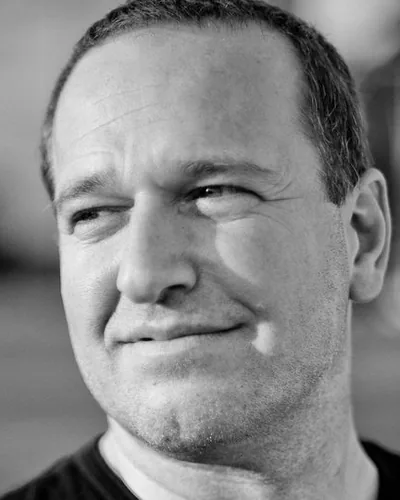
Mickey Bergman has spent his career recovering Americans detained abroad, working through unofficial channels in cases where direct government engagement is not possible. He worked for years alongside Governor Bill Richardson as vice president and executive director of the Richardson Center for Global Engagement, which operated as a private diplomatic channel, and went on to lead Global Reach, a non-profit that negotiates the release of hostages and wrongfully detained people. He has been involved in a long series of recovery efforts across multiple countries.
In the Shadows: True Stories of High-Stakes Negotiations to Free Americans Captured Abroad was published in 2024, written with the journalist Ellis Henican.
Bill Richardson — former Governor of New Mexico, Ambassador to the United Nations, Energy Secretary and congressman, and the figure at the center of much of this book — died in September 2023, the year before publication.


Where the proceeds go
We donate 100% of what we earn to Children of Fallen Heroes
If you buy through the link above we may earn a small commission, at no extra cost to you. Every penny of it goes to Children of Fallen Heroes, a registered 501(c)(3). We keep none of it.
They are developing an 82-acre campus in Vass, North Carolina for the children of military families, first responders and foster youth — STEAM education in aviation, robotics and drones, alongside leadership and healing programs. Over eleven years their programs have reached more than 15,000 young people and families.
We participate in the Amazon Services LLC Associates Program and similar affiliate programs; these relationships do not influence our recommendations. Cookies and similar technologies record interactions with affiliate links — see our Privacy Policy to disable them, or reach us via Contact.