
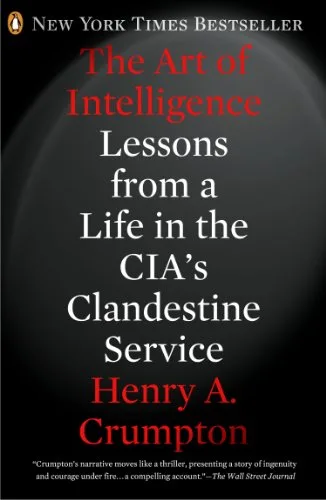
At the height of the fighting in Afghanistan in late 2001, fewer than five hundred Americans were on the ground. They were CIA officers and Special Forces, working with Afghan commanders whose loyalties had to be assessed one at a time, calling in air power against an enemy that outnumbered them by orders of magnitude. Henry Crumpton was given the job of organizing that campaign in the days after 11 September, and The Art of Intelligence is his account of how it was run.
The book is a memoir of twenty-four years in the CIA's Clandestine Service, published by Penguin Press in 2012. It moves from Crumpton's first recruitments in Africa through the Counterterrorist Center, the early development of the armed Predator, and the Afghan campaign, to two years at the State Department as Coordinator for Counterterrorism.
What makes it worth a professional reader's time is not the operational narrative that most reviewers dwell on, but the fact that Crumpton is unusually clear about the mechanics of recruiting and running people who have every reason to lie to you, and about what an organization has to do to be capable of acting on what those people say.
The obvious caution applies. This is an authorized account by a man defending decisions he made, cleared by the CIA's Publications Review Board, and it is warmest exactly where independent scrutiny has been hardest — on the Predator program and on what the Afghan campaign actually achieved beyond its first ninety days.
What the book actually covers
Three strands, unevenly weighted. The first is tradecraft: how Crumpton learned to spot, assess, develop and recruit sources, and how he thinks about the difference between a source who is useful and a source who is merely productive. This is the strongest material and the least discussed.
The second is institutional. Crumpton is direct about the CIA's condition through the 1990s — the budget cuts, the risk aversion that followed the Cold War, the reluctance to put officers into places where they might be killed or embarrass the Agency. His argument is that the capability degraded quietly, over years, and that nobody noticed until it was needed.
The third is Afghanistan, and it is written as a case study in unconventional command: a very small number of people, an ally whose interests overlapped only partly with American ones, and a plan that depended on reading local politics correctly. The chapters on choosing which commanders to back are the most transferable in the book.
Where it is weakest is on consequences. The campaign is presented as a vindication of a method, which in its opening phase it was. The longer arc — what happened to those alliances, what the reliance on local proxies cost later — sits outside the frame Crumpton has chosen. A reader who wants that will not find it here.
Why it matters for your risk posture
Read it for the source-validation method, which is the part that transfers directly. Crumpton's working assumption is that a source's information is worth exactly as much as your understanding of why they are giving it to you. Motive first, material second. That inverts how most commercial intelligence is consumed, where a plausible document tends to end the inquiry rather than begin it.
Read it for the account of capability decay. The Agency Crumpton describes in 1995 did not decide to become worse at human intelligence; it made a series of individually defensible choices about cost and risk, and the capability atrophied as a by-product. Any organization that has quietly stopped doing something difficult will recognize the pattern, and the recognition is more useful than the Afghan chapters.
And read it for the limits of a small, capable team. The campaign worked because a handful of people had authority to decide quickly and were trusted to do it. That is a real lesson about how to structure a fast-moving operation, and it is also the book's blind spot: speed and autonomy produced the ninety-day result and also the commitments nobody had time to examine.
Key takeaways
- A source is only as good as your account of their motive. Material without a motive assessment is input rather than intelligence.
- Capability decays without a decision to let it. Nobody voted to hollow out human intelligence; a decade of reasonable-looking economies did it.
- Small teams with real authority move fast in both directions. The structure that produced the result also produced the unexamined commitments.
- Local knowledge is the scarce input. The campaign turned on judgments about which Afghan commanders would hold, which no amount of collection could have substituted for.
- An authorized memoir is a source and a defense at once. Read the sections where the author is most confident with the most care.
About the author
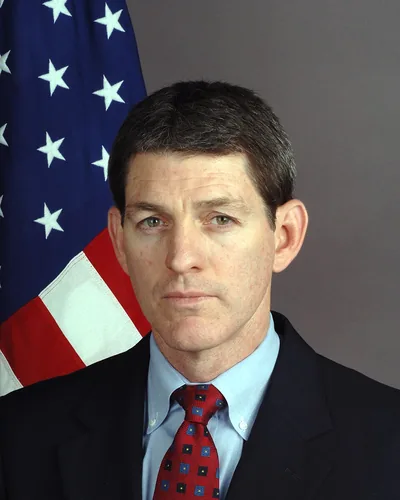
Henry A. "Hank" Crumpton served in the CIA from 1981 to 2005 — a twenty-four-year career in the Clandestine Service, with postings in Africa and Asia and senior roles in the Counterterrorist Center. He was involved in the development of the Predator unmanned aircraft program, and in the days after 11 September 2001 was tasked with organizing and leading the Agency's Afghanistan campaign.
He left the CIA in 2005 and served as the State Department's Coordinator for Counterterrorism, with the rank of Ambassador-at-Large, from August 2005 to February 2007. He subsequently founded a private advisory firm.

Where the proceeds go
We donate 100% of what we earn to Children of Fallen Heroes
If you buy through the link above we may earn a small commission, at no extra cost to you. Every penny of it goes to Children of Fallen Heroes, a registered 501(c)(3). We keep none of it.
They run an 82-acre campus for the children of military families, first responders and foster youth — STEAM education in aviation, robotics and drones, alongside leadership and healing programs. More than 15,000 young people and families have been through it in eleven years.
We participate in the Amazon Services LLC Associates Program and similar affiliate programs; these relationships do not influence our recommendations. Cookies and similar technologies record interactions with affiliate links — see our Privacy Policy to disable them, or reach us via Contact.