
On 2 April 2025 the United States announced a broad restructuring of its import tariffs. A ten per cent baseline duty on goods of all foreign origin took effect on 5 April, country-specific rates followed on 9 April, and those rates applied even where goods arrived under an existing free trade agreement. Those rates were then modified again in July of the same year.
Most organizations handled the consequence as a procurement problem, which is where the cost appeared. Treating it that way produced accurate arithmetic and, in a good many cases, the wrong decision.
Pricing an exposure is not the same as assessing it
A procurement function can calculate what a given duty costs on a given volume, and it can renegotiate or reroute to reduce that figure. What it cannot supply is a view on how likely the next change is, in which direction, and on what timescale, and that view is what determines whether re-siting production makes sense or destroys value.
The distinction matters because the two decisions have very different reversal costs. Absorbing a duty for four quarters is recoverable. Moving a manufacturing line to a jurisdiction whose treatment then changes is not, and the second decision is routinely made on the strength of the first analysis.
Rerouting attracts its own scrutiny
The 2025 measures anticipated exactly the response they provoked. Goods that United States Customs and Border Protection determines to have been transshipped in order to evade the applicable duty attract an additional forty per cent rate in place of the rate for the declared country of origin.
Rules of origin therefore became an enforcement question rather than a documentation one. A supply chain rearranged quickly, through intermediaries selected for speed, is precisely the pattern that attracts attention, and the organization carries the exposure even where the arrangement was made in good faith by a distributor several steps away.
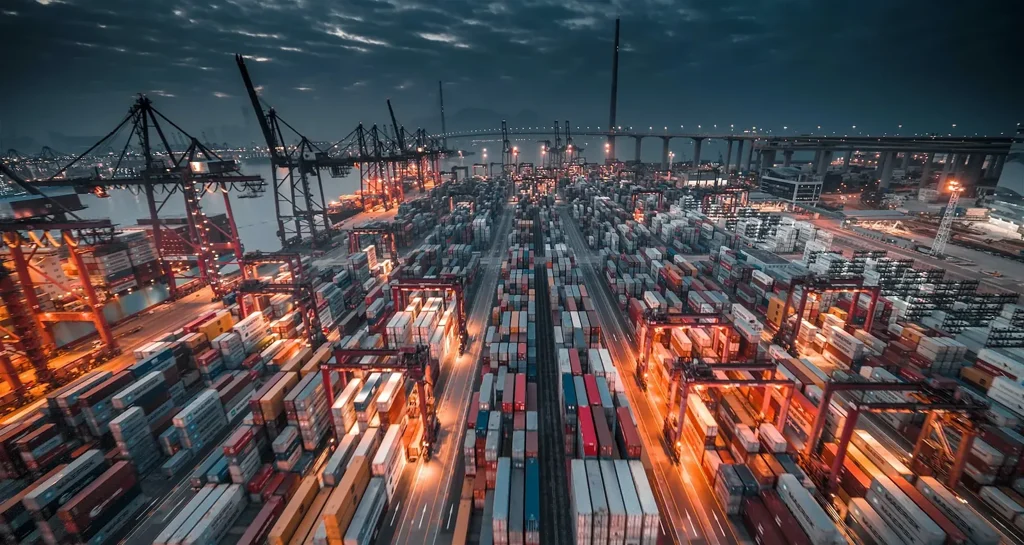
Rules of origin became an enforcement question rather than a documentation one. Goods determined to have been transshipped to evade a duty attract an additional forty per cent rate.
What you now need to know about your own supply chain
The practical consequence is that origin has become something to verify rather than to accept on a certificate. Three questions are worth answering for any material route.
- Where is the substantial transformation actually taking place? Origin follows the work rather than the address on the invoice, and an assembly step added to qualify for a rate is the specific arrangement enforcement is looking for.
- Who actually owns the facility doing the work? Ownership of a plant, as distinct from its location, has become a live question in origin determination, and it is not something a supplier declaration reliably discloses.
- What would you be able to show? The documentation that satisfies a customs authority is not the documentation that satisfies a purchase ledger, and the difference is discovered at an inconvenient moment.
Answering these is business intelligence work rather than compliance work. It requires establishing what is true about a counterparty rather than collecting what the counterparty asserts, and the two produce different answers often enough to justify the exercise.
Political risk is not a slow variable
The reason this belongs on a risk register rather than in a cost model is the shape of the exposure. Most commercial risks degrade a position gradually and can be managed as they develop. A change in trade policy can invalidate the economics of an entire market in a single announcement, with no intermediate state in which to adjust.
That asymmetry is the argument for holding a considered view of a market before committing to it. Political risk assessment is useful in proportion to how early it is commissioned, and it loses most of its value once the capital is already deployed.

Assessments pegged to a particular administration age badly. The durable version examines the structural drivers underneath, which change slowly enough to be worth writing down.
Scenario work that survives an election cycle
Assessments pegged to the intentions of a particular administration age badly and tend to be quietly discarded within a year or two. The durable version examines the structural drivers underneath: the domestic constituencies a policy serves, the legal instruments available, the constraints imposed by existing agreements, and the historical pattern of how quickly measures have been introduced and withdrawn.
Those factors change slowly enough to be worth writing down, and they support the question a board actually needs answered, which is not what will happen but which of its current commitments would be difficult to reverse if it did.
The question for a board
Identify the sourcing or investment decisions of the last two years that would be reversed if trade treatment changed again, and establish how long reversing each would take. Where the answer is measured in years, the decision was a political risk decision whether or not it was taken as one.
For the wider context, our Book of the Month shelf has The New World Disorder and Conflict, both of which are useful on how consistently the direction of events is misread by people with every reason to read it correctly.
Falcone International
Bring us a question like this one
We handle corporate investigations, due diligence, financial investigations and duty of care — usually for people who need something established quietly, and established properly, before it turns into a problem.