
Almost every major corporate fraud of the last thirty years was known internally, by someone, long before it became public.
That is the uncomfortable premise of Tom Mueller's book. The information existed in almost every case, somebody had it, and they usually raised it. What determined whether the fraud continued was not detection — it was what happened to the person who spoke.
For any organization that relies on internal reporting as a control, this book is about whether that control actually works.
What the book actually covers
Mueller spent years interviewing whistleblowers across sectors — pharmaceuticals, defense contracting, finance, government — and the book is built on their accounts of what happened after they raised concerns.
The pattern he documents is remarkably consistent. The initial report is made through proper channels. It is not acted upon, or is acted upon superficially. The reporter persists regardless. At that point the organizational response shifts from addressing the substance to addressing the person: reassignment, performance criticism that did not previously exist, isolation, and eventually exit — often with a settlement and a confidentiality agreement that ends the matter without resolving it.
Mueller is precise about the mechanisms. He examines the legal frameworks intended to protect whistleblowers — including the US False Claims Act qui tam provisions, which permit a share of recovered funds — and is clear-eyed about their limits. Financial incentives change the calculus but do not protect the person, and most reporters end up worse off regardless of whether they were right.
He also examines what makes an organization different. The institutions where internal reporting works are the ones where raising a concern is structurally survivable — where the reporting line does not run through the person being reported on, where investigation is genuinely independent, and where the organization has visibly protected someone before.
The book is long and the case studies are detailed. None of it makes for a comfortable read.
Why it matters for your risk posture
Read it because internal reporting is a control that most organizations claim and few actually possess. If your hotline routes to someone with an interest in the outcome, or if no one in the organization can name a time a reporter was protected, the control is nominal. That is a governance finding a board should want.
Read it for the timing insight. Mueller's cases repeatedly show a long interval between internal knowledge and external exposure — frequently years. That interval is when an independent investigation is cheap, quiet and effective, and it is almost always missed because the organization is managing the reporter rather than the substance.
And read it as the internal counterpart to David McClintick's Indecent Exposure. McClintick's account describes a board weighing the commercial value of a studio head against acting on his forged checks; David Begelman pleaded no contest to a grand theft charge in 1978. Mueller documents the same instinct at every level of the organization, and what it does to the person who declines to go along with it.
Key takeaways
- Detection is rarely the failure. The information usually exists internally, often for years. What fails is the organization's response to it.
- The organizational reflex is to manage the reporter, not the report. Reassignment, sudden performance criticism, isolation and settlement are a recognizable sequence.
- Legal protection is real but limited. Frameworks and financial incentives change the calculation; they do not make the reporter safe.
- The interval between internal knowledge and external exposure is the opportunity. That window is when independent investigation is cheapest and most effective.
About the author

Tom Mueller is an American author and journalist whose work is built on long-form interviewing and extended research. His earlier book Extra Virginity examined adulteration and mislabeling in the olive oil trade and was widely read — an unlikely subject that turned out to be a study in supply-chain deception.
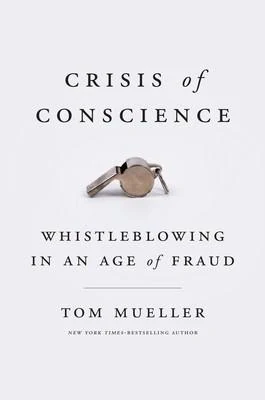
Crisis of Conscience: Whistleblowing in an Age of Fraud was published in 2019 and represents several years of work with whistleblowers across multiple industries and jurisdictions.

Where the proceeds go
We donate 100% of what we earn to Children of Fallen Heroes
If you buy through the link above we may earn a small commission, at no extra cost to you. Every penny of it goes to Children of Fallen Heroes, a registered 501(c)(3). We keep none of it.
They run an 82-acre campus for the children of military families, first responders and foster youth — STEAM education in aviation, robotics and drones, alongside leadership and healing programs. More than 15,000 young people and families have been through it in eleven years.
We participate in the Amazon Services LLC Associates Program and similar affiliate programs; these relationships do not influence our recommendations. Cookies and similar technologies record interactions with affiliate links — see our Privacy Policy to disable them, or reach us via Contact.