
Money laundering and financial crime raise different questions for an investigator, an auditor and a person responsible for committing capital. This collection brings together ten published book reviews, practical due-diligence guidance and a Falcone case study, organized around the question the reader needs to examine.
The books provide methods, historical accounts and competing explanations. They do not establish that a particular transaction is unlawful, and older legal material needs to be checked against current requirements. Follow each review for its fuller assessment and limitations.
Understand how illicit money moves
Start with Cassara for a survey of value-transfer methods, Madinger for an investigative reference, or Lilley for the wider infrastructure around laundering. Read their examples as patterns to examine against evidence, rather than as a checklist that proves misconduct.
Money Laundering and Illicit Financial Flows by John Cassara
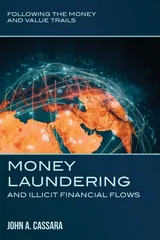 Cassara approaches illicit finance through the methods used to transfer value, including trade, cash and informal remittance systems. Our review considers what this perspective adds to an investigation and why a payment record alone may leave important parts of a transaction unexplained.
Money Laundering: A Guide for Criminal Investigators by John Madinger
Madinger provides a working reference for recognizing laundering structures and following the evidence they leave. Our review examines its investigative method and practical limits. The book's legal and procedural material should be checked against the edition being used and the current rules in the relevant jurisdiction.
Dirty Dealing by Peter Lilley
Lilley examines the people, services and international structures that facilitate laundering. The review considers the value of that broader view for counterparty work, while recognizing that a historical account cannot establish the current risk of a particular jurisdiction or business.
Examine cases and investment scrutiny
These accounts provide different perspectives on the gap between a convincing proposition and the evidence available to investors and intermediaries.
Billion Dollar Whale by Tom Wright and Bradley Hope
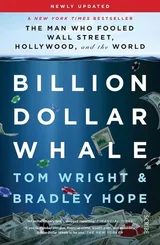 Wright and Hope reconstruct the 1MDB affair through the people and institutions involved. Our review focuses on the due-diligence questions raised by the account: how authority was assumed, how associations supplied reassurance and where independent verification was missing. The book is a historical account, rather than a record of every subsequent proceeding.
The Key Man by Simon Clark and Will Louch
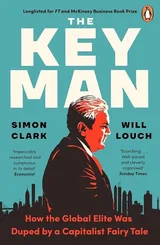 Clark and Louch's account of Abraaj is relevant to readers assessing a fund manager's claims. Our review examines the relationship between an attractive investment proposition, the standing of existing investors and the evidence needed to test the organization behind it. It also distinguishes the book's account from later developments.
Explore law, definitions and incentives
The following books broaden the collection beyond laundering to corporate misconduct, its interpretation and the conditions in which it occurs.
An Introduction to Corporate and White-Collar Crime by Frank J. DiMarino and Cliff Roberson
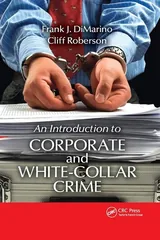 DiMarino and Roberson introduce corporate offending, the conditions in which it occurs and the US legal framework. Our review explains the textbook's relevance to counsel, finance and risk teams. Its historical statutory discussion is a starting point for study, not a substitute for checking current law or taking advice on a matter.
International Handbook of White-Collar and Corporate Crime, edited by Henry N. Pontell and Gilbert Geis
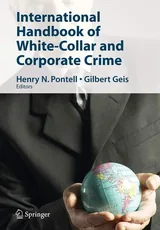 Pontell and Geis bring together international research on corporate and white-collar crime. The review considers questions of definition, measurement and institutional response. This is useful background when assessing what published fraud statistics can support and what may fall outside the categories being counted.
Lying, Cheating, and Stealing by Stuart P. Green
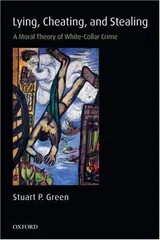 Green examines the moral distinctions between deception, cheating and other forms of misconduct. Our review explains why those distinctions can help a risk team describe a concern precisely, even when the legal characterization requires a separate assessment. The book is legal philosophy rather than an investigation manual.
The Cheating Culture by David Callahan
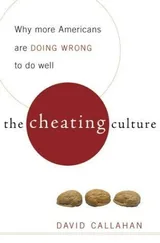 Callahan examines the incentives and social conditions surrounding dishonest behavior across several fields. Our review considers its relevance to controls and organizational culture, while keeping the author's broad argument distinct from evidence about an individual employee or institution.
How to Steal A Lot of Money — Legally by Edward Siedle
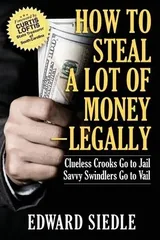 Siedle uses the perspective of an investment scammer to examine credentials, fees, selling documents and performance claims. Our review considers how readers can turn that device into questions for due diligence, and where its provocative framing requires careful interpretation.
Put the questions into an investigative brief
Check the people and entities behind a transaction
Our guide to pre-investment due diligence explains how to examine principals, ownership, co-investors and source reliability. It includes a practical brief for deciding which questions could change an investment decision and which require further evidence.
Examine an unusual payment pattern
Falcone's UK CFO money-laundering case study describes an engagement involving overpayments and requests to transfer the surplus to third-party accounts. It shows why the transaction history and the identity of the proposed recipient need to be considered together. The response described belongs to that engagement; another matter requires its own factual and legal assessment.
Define the work and the report
The financial-investigations service explains work on financial records, transaction patterns and reporting. Asset searches and recovery support addresses identifying assets and supporting the client's recovery strategy. A useful brief distinguishes what is known, what needs verification and what legal or access limits may affect the work.
Questions about the collection
Which money-laundering book should I start with?
The choice depends on the task. Cassara offers a survey of illicit value transfer; Madinger is aimed at investigative practice; Lilley examines the wider industry and its facilitators. The linked reviews explain the strengths and limits of each, so readers can choose a relevant starting point.
What is trade-based money laundering?
Trade-based money laundering uses commercial transactions to conceal criminal proceeds and transfer value. In its 2006 study, the Financial Action Task Force describes techniques involving false prices, quantities or descriptions of traded goods. An unusual invoice is a reason to examine the underlying trade and supporting records; it does not establish laundering on its own.
Are all the books guides to money laundering?
No. The collection also covers investment fraud, corporate offending and organizational incentives. Those subjects can inform an investigation, but they should not be treated as interchangeable with money laundering. Each review identifies the question for which the book is useful.
Falcone International
Bring us a question like this one
We handle corporate investigations, due diligence, financial investigations and duty of care — usually for people who need something established quietly, and established properly, before it turns into a problem.