
When political risk reaches a risk register at all, it often arrives as a country rating from a subscription index. That rating describes the same country to every subscriber and says little about the operations one business has there.
This guide sets out a method a risk manager can run internally. It follows the four stages Falcone International uses in its own political risk assessments and includes a worked example matrix.
What political risk is, and how it differs from country risk
Political risk is the possibility that the exercise of political power, or a contest over it, changes the value, legality or safety of what an organization has in a place. The source may be a government acting through licensing, taxation or expropriation, a foreign government imposing sanctions, or unrest around a disputed election.
Country risk is the wider category, covering everything about a country that affects the return on doing business there, including its economy, currency, creditworthiness and infrastructure, with political factors as one component. In practice country risk is usually a single rating for the whole country, whereas a political risk assessment is only useful when it is written about a specific exposure.
Political risk is not confined to emerging markets. Peter Neumann argues in The New World Disorder that volatility within Western states now counts as a business risk on its own terms. It reaches companies as regulatory reversal and sudden changes to sanctions and export controls.
How to assess political risk in four stages
1. Scope the exposure
Scoping decides whether everything after it is useful, and it is the stage most often skipped. List what the organization has at stake in the market: assets, staff and contractors, licenses, government contracts, cash held locally, hard-to-replace suppliers and the local relationships the business depends on.
Against each line, record the political arrangement it depends on continuing. A plant may depend on a license being renewed on present terms, and a distributor on its principal keeping a patron in government. The piece on how geopolitics affects businesses of every size puts the same question to boards. Include the home jurisdiction too, since its export controls and sanctions can reach an overseas operation as directly as the host government can. The result is an exposure register with one row and one named owner per dependency.
2. Source the evidence
 Start with the documentary record: legislation and draft bills, regulatory filings, court and enforcement records, company registries and the local-language press. The press deserves extra weight, because detail that matters to one operation is often reported only locally.
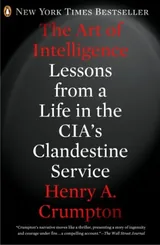
Documents establish the formal position, while the informal one, meaning who holds influence and which approvals are needed in practice, has to come from people with direct experience of the market and no stake in your answer. Henry Crumpton's memoir The Art of Intelligence insists that a source cannot be weighed until you understand why the source is talking to you.
Nothing material should enter the assessment on a single source. An account that arrives separately from a filing, a press report and an unconnected person is a finding. Internal reporting deserves the same test, since local management may have reason to be optimistic.
3. Assess what holds, what breaks and on what timeline
For each row, record what would have to happen for the exposure to materialize and how much warning you would realistically get. Record the likely impact too, and the indicator that would move first. Describe the trigger in terms of structural drivers rather than personalities. As the case for putting tariffs on the political risk register argues, a view built on one administration's stated intentions dates quickly. The interests a policy serves and the legal instruments available to a government change far more slowly.
Rank exposures on impact and warning together. A revoked license or a sudden currency control moves from intact to broken overnight. A moderate impact that arrives without notice can therefore be harder to manage than a severe one that builds over a year. Note for each exposure how long the commitment behind it would take to reverse.
4. Monitor the indicators
Reduce the indicator column to a short list, tying each item to a row in the register and giving it an owner who checks it on a fixed schedule. Useful indicators are narrow and concrete, such as a license renewal date, the gap between official and informal exchange rates, or a distributor's ownership filings.
A worked example: an illustrative political risk matrix
The matrix below is illustrative and describes no real company or country. It concerns a hypothetical mid-sized manufacturer with a plant and a local distributor in an unnamed emerging market. The manufacturer imports components from its home country and exports part of its output, and each row is an exposure set against the four stage three questions.
Operating license
What would have to happen: The issuing authority refuses renewal, adds conditions or revokes the license.
Realistic warning: Renewal dates are known; revocation can come within days.
Impact: High: production stops and the plant cannot move quickly.
Indicator to watch: Leadership changes at the authority; licenses withdrawn from similar foreign-owned operators.
Local distributor
What would have to happen: The principal proves to be politically exposed, loses a patron or comes under investigation.
Realistic warning: Often none, if the connection was never identified.
Impact: High: compliance exposure and loss of the sales channel.
Indicator to watch: Regional press coverage of the principal and relatives; ownership filings.
Currency and repatriation
What would have to happen: Capital controls, a multiple exchange rate or limits on paying dividends abroad.
Realistic warning: Pressure is visible for months; the control itself is usually immediate.
Impact: Medium to high: earnings trapped and imported components harder to pay for.
Indicator to watch: Gap between official and informal exchange rates; delays reported by other foreign companies.
Staff safety
What would have to happen: Unrest around a contested election, or foreign staff targeted for their nationality.
Realistic warning: Days to weeks around scheduled events; little for opportunistic crime.
Impact: High, with a duty of care that follows the staff.
Indicator to watch: Election calendar; protests near the plant; incidents involving foreign nationals.
Export controls and sanctions
What would have to happen: Either government restricts a component, an end use or a counterparty, or designates a customer.
Realistic warning: Variable: some rules are consulted on, but designations apply on publication.
Impact: Medium to high: shipments halt and enforcement exposure may follow.
Indicator to watch: Proposed rules in both jurisdictions; designations in the sector.
Tariffs
What would have to happen: Either government raises duties on components or finished goods, or withdraws a trade preference.
Realistic warning: Little: new duties can apply within days of announcement.
Impact: Medium at first; high if it removes the reason for the plant's location.
Indicator to watch: Trade disputes involving either government; domestic industries seeking protection.
The warning column is the easiest to leave thin, and filling it in often changes the ranking. Here the currency exposure usually builds visibly, which makes it easier to prepare for than the distributor exposure, since that can arrive with no public warning if the principal's connection was never found.
The matrix is also the practical answer to how political risk can be measured. A single country score cannot capture an exposure that depends on one licensing authority, and a probability attached to a political event is a forecast nobody can reliably make. Rating each exposure on impact and realistic warning, with the trigger and first indicator written down, gives a measure that can be challenged and updated.
From assessment to management
An assessment becomes risk management once each high-ranked row has a response. Political risk insurance can compensate for expropriation or political violence after the event. Active measures such as careful structuring, partner choice, contingency plans and monitoring reduce the likelihood of needing to claim, and a significant exposure may warrant both.
Why an assessment is not a forecast
No method can tell an organization reliably when a given government will lose power. An assessment that claims otherwise is offering confidence the evidence cannot support. What it can establish is the organization's position if the event occurs, the indicators likely to precede it and the warning each would give.
David Omand's How Spies Think keeps establishing what is going on separate from explaining it and from estimating what follows. A written assessment should make that separation visible by labeling each finding established, likely or contested. An established finding is documented and independently corroborated; a likely one is supported by the weight of evidence but rests on a gap or a single source; a contested one is disputed by credible sources or open to more than one reading.
Where the evidence is thin, the assessment should say so. A board that cannot tell which findings would survive a challenge will tend to give them all equal weight.
When to reassess
An assessment begins to age on the day it is written. Apart from scheduled reviews, four moments call for it to be repeated or commissioned afresh:
- Before capital is committed, whether through a market entry, a new local partner or an acquisition in an unfamiliar jurisdiction.
- After an event that changes its premises, such as an election, a coup, a nationalization in the sector or a new sanctions listing.
- When staff are in the country and the question has become one of duty of care, an obligation many jurisdictions impose by law that travels with the staff.
- At renewal, when a lender, insurer or investor asks about political exposure and the last written view is several years old.
Between those moments, indicator owners should report on fixed dates whether anything has moved and whether the original reading still stands. Petraeus and Roberts, in Conflict, identify refining the original idea as the leadership task most often skipped. A recurring date with a named owner is the simplest way to make sure it happens.
Common mistakes
- Assessing the country instead of the exposure. A general country report tells every reader the same thing, while the decisions an organization faces turn on the dependencies in its own register.
- Relying on screening databases for politically exposed persons. Screening tools are stronger on national office-holders than on regional and municipal ones, and they seldom capture relatives or business proxies. A clean result means only that the database found nothing. Where a partner matters commercially, check the connection by hand against regional press and registries.
- Treating adverse conditions as a temporary deviation. Neumann argues that models expecting a drift back toward liberal norms underestimate how long unfavorable conditions last. The habit makes an exposure look shorter-lived and cheaper to carry than the evidence supports.
- Pricing a political exposure as a cost. Procurement can calculate what a new duty costs. A decision such as moving production depends instead on the odds of a further change and how long the move would take to undo.
- Letting the first reading harden. A view formed when information was scarce tends to be defended against later evidence. Petraeus and Roberts trace that failure through decades of military campaigns.
Where an outside assessment adds to an internal one
An internal team knows the operation better than any adviser and can run scoping and monitoring itself. The gaps tend to sit in sourcing and in labeling findings, which need people in the market with no stake in the outcome, and enough distance from earlier decisions to call a finding contested when the business would prefer it settled.
That is what a political risk assessment from Falcone International is designed to supply. The organization's policy specialists have backgrounds in diplomacy, policy analysis and government service, and several have spent decades in the countries they cover. We label every finding established, likely or contested, which lets a board decide which parts to rely on.
Where the exposure runs through a partner or an acquisition, the work overlaps with pre-investment due diligence. Where it is as much commercial as political, it runs alongside strategic business intelligence. The most useful time to commission an assessment is before capital is committed, while it can still change the decision.
Frequently asked questions
What is political risk?
Political risk is the possibility that the exercise of political power, or a contest over it, changes the value, legality or safety of what an organization has in a place. It can come from licensing, taxation or expropriation, from sanctions imposed by another government, or from unrest, and it includes the organization's home jurisdiction as well as the markets where it operates.
What is the difference between political risk and country risk?
Country risk is the wider category, covering everything about a country that affects the return on doing business there, including its economy, currency, creditworthiness and infrastructure. Political risk is the part driven by the use of political power. Country risk is usually a single rating for the whole country, whereas a political risk assessment is written about one organization's specific exposure.
How do you measure political risk?
A single country score rarely captures an exposure that depends on one license or one partner, and the probability of a political event cannot be forecast reliably. A more useful measure rates each exposure on impact and realistic warning time, records what would have to happen for it to materialize, and names the indicator that would move first.
What is a political risk assessment matrix?
A political risk assessment matrix lists an organization's exposures in one country as rows, such as its operating license, local partner, currency position and staff. For each one it records what would have to happen, how much warning there would realistically be, the likely impact and the indicator to watch, so the same document serves as a ranking and a monitoring plan.
Falcone International
Bring us a question like this one
We handle corporate investigations, due diligence, financial investigations and duty of care — usually for people who need something established quietly, and established properly, before it turns into a problem.